Materials Construction And Restoration · Volume 5
Materials, Construction & Restoration — Vol 05: Glues & Adhesives
Of all the classic-vs-modern splits that run through a mechanical organ, the one in the glue pot is the sharpest. Every other material choice — a beech pipe versus a balsa one, a sheep-leather bellows versus a blackout-cloth one, a solid walnut case versus a Baltic-birch plywood one — changes how the instrument sounds, weighs, or ages. The choice of adhesive changes something else entirely: whether a future restorer can ever take the instrument apart again without destroying it. That is why this is the headline volume of the dive, and why the theme Jeff asked for — classic versus modern — is at its most concrete here.
The argument of this volume is deliberately even-handed. Hot hide glue is not “better” than PVA, and PVA is not “cheating.” They are answers to two different questions. A museum-grade restoration of a 120-year-old barrel organ asks “how do I do this so the next person can undo it?” and the answer is hide glue. A hobbyist’s first hand-cranked busker organ asks “how do I get a strong, cheap, forgiving joint on a Saturday afternoon?” and the answer — the builder John Smith’s own answer — is PVA. This volume lays out both columns, quotes the numbers exactly, and gives a decision rule at the end.
5.1 The vocabulary of a glue joint
Before comparing adhesives it is worth pinning down the five terms that separate them, because the busker corpus uses them precisely. The definitions below follow Thomas N. Spehar’s “Glue Clues” article, written for hobby crank-organ builders (jsart125, Thomas Spehar).
- Open time (also “working time” or “assembly time”): the interval, after the adhesive is spread and the parts are brought together, during which the joint can still be adjusted — clamped, slid, squared up — before the glue starts to grab. A long open time is forgiving; a short one demands that the parts be pre-fitted and the clamps ready before any glue is spread.
- Set time: the point at which the joint holds itself together and the clamps can come off. The joint is not yet at full strength.
- Cure: full chemical/mechanical strength. For most wood glues this is hours to a day after set; for epoxy it depends on the formulation.
- Flash-off: with solvent- or water-carried adhesives (contact cements, some PVAs), the waiting period after spreading during which the carrier evaporates before the parts are joined. Contact cement is the textbook case: both faces are coated, left to flash off until touch-dry, then pressed together for an instant grab.
- Squish-out (squeeze-out): the bead of adhesive forced out of the joint line under clamp pressure. How it is cleaned up — wet rag, dry chisel after set, or never — is one of the sharpest practical differences between glues, and a good proxy for how a joint will behave for the restorer decades later.
These five terms are all that is needed to read the comparison matrix in §5.6. The rest of the volume is about how hide glue, fish glue, and the modern palette each score on them — and on the sixth axis that the others do not have a word for, because it only matters to a restorer: reversibility.
5.2 Hot hide glue — the classic
Hot hide glue is the adhesive that held together virtually every wooden musical instrument, piece of case furniture, and mechanical organ built before the mid twentieth century. It is made by boiling down animal collagen — hides, and connective tissue — into a protein glue that is solid and glassy at room temperature and liquid when warm. It is sold as granules, pearls, flakes, or cake, dissolved in water, and applied hot from a heated glue pot (typically a double-boiler holding the working glue at roughly 60 °C / 140 °F; the exact pot temperature is a working range, marked (est.) here because sources quote it loosely).
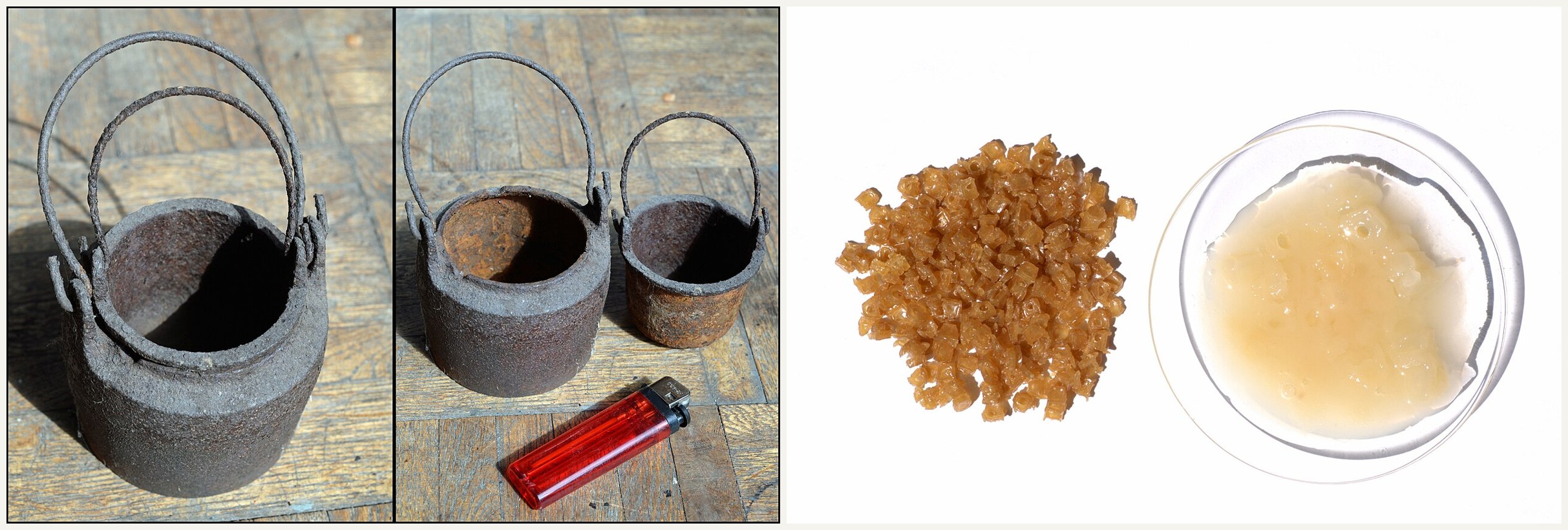
5.2.1 Gram strength — how hide glue is graded
Unlike a bottle of wood glue, which is sold under a brand name, hide glue is sold by a number: its gram strength. Gram strength is a standardized measure of gel strength (the Bloom gelometer test), and it is the single specification that tells a builder what a batch of hide glue will do. The relationship a builder must internalize is this (Popular Woodworking; Tools for Working Wood):
- Higher gram strength = a stronger, tackier glue, but a shorter open time.
- Lower gram strength = weaker and less tacky, but a longer, more forgiving open time.
The inverse relationship is the whole game. A high-gram glue grabs almost the moment the parts touch, which is superb for rubbed joints and hammer veneering where instant tack is wanted, but punishing on a large glue-up. A lower-gram glue buys the builder seconds of adjustment at the cost of ultimate holding power.
The standard, general-purpose grade — the one a builder reaches for by default, and the cheapest common grade — is 192 gram strength (Popular Woodworking; Tools for Working Wood). It is the furniture-maker’s and instrument-maker’s everyday hide glue: strong enough for structural joinery, tacky enough to be useful, and with an open time long enough to actually work. Grades commonly run higher (up to the 250–315 gram range for specialist high-tack work) and lower; 192 is the reference point, and any grade quoted here beyond 192 is furniture- trade general knowledge rather than a figure taken off a specific catalog page.
5.2.2 Open time — a race against cooling
Hot hide glue’s defining working characteristic is that it sets as it cools. It is not waiting for water to leave or for a chemical reaction to finish; it is a warm liquid that gels back to a solid as its temperature drops. That gives it, at the standard 192 gram furniture grade and at normal room temperature and relative humidity, an open/working time of roughly 1 to 2 minutes (Popular Woodworking). In a cold shop it is less; on a warm day, or with the parts pre-warmed, it is more.
One to two minutes is short. It means the builder pre-fits every part dry, lays out and opens every clamp, and rehearses the assembly before the brush ever touches the pot — and then works fast, or keeps the parts warm (a heat lamp, a warmed bench, a heat gun played over the joint) to stretch the window. This is the practical reason hide glue rewards experience and punishes the beginner’s large, complicated glue-up: a joint that has cooled and gelled before it is closed is a joint that has failed, and must be reheated to recover. The gram-strength trade-off compounds it — reach for a tackier, higher-gram glue and the 1–2 minutes shrinks further.
The diagram in §5.3 plots this gram-strength-versus-open-time relationship directly.
5.2.3 The bond — hard, brittle, and long-lived
A cured hide-glue joint is hard and brittle. It does not flex, and it does not creep (slowly deform under sustained load) the way a PVA joint can — the Player-Care hide-glue Q&A notes that a hide-glue joint’s margins stay “as hard as rock” even where the joint fails (Player-Care hide Q&A). That hardness carries a brittleness which sounds like a weakness but is a conservation feature: when a hide-glued joint is stressed to failure it fractures cleanly at the glue line, leaving the wood on both sides intact, rather than tearing out fibres the way a tougher modern glue does — the property that lets a violin top, for instance, be prised off for repair without damage (AIC WAG; general hide-glue/lutherie literature). The joint gives up before the wood does.
And it lasts: a sound hide-glued joint can survive for centuries, as the surviving stock of pre-industrial furniture and instruments attests (AIC WAG). A hide-glued joint that has failed has almost always failed because the glue dried out, absorbed moisture, or was shocked apart, not because the glue itself chemically degraded.
5.2.4 Reversibility — the entire point
Here is the property that makes hide glue matter to a restorer, and the reason this volume is built around it. Hot hide glue is fully reversible. A cured hide-glue joint can be reopened with heat and moisture — and it can be re-glued simply by introducing fresh hot glue, which re-dissolves and bonds to the old (Player-Care hide Q&A; Popular Woodworking). A restorer steams or heats a joint, the old glue softens and lets go, the parts separate and the mating surfaces clean up easily (Player-Care hide Q&A; Popular Woodworking), and fresh hide glue closes the joint again — with no solvents, no scraping down to bare wood, and no damage to the original material.
This is exactly why conservators and restorers of antiques prefer it (Player-Care hide Q&A; AIC WAG). It satisfies the reversibility principle that governs all serious conservation work — the rule, discussed at length in Vol 7, that nothing should be done to an object that cannot later be “easily and completely undone.” No modern structural wood adhesive can make that claim. Hide glue is the classic organ’s glue not by nostalgia but because a hide-glued instrument is, by construction, always repairable.
5.3 Hide glue: the open-time / gram-strength picture
The figure below plots the inverse relationship at the heart of §5.2: as gram strength rises, tack and ultimate strength rise with it, but open time falls. The 192 gram furniture grade is marked as the general-purpose reference, sitting at the roughly 1–2 minute open-time band at normal room temperature and humidity.
Figure 5.1 — Hide glue trades open time for strength and tack as gram strength rises. The standard 192 gram furniture grade sits at roughly 1–2 minutes of working time at normal room temperature and relative humidity; a tackier higher-gram glue gives less. Because the glue sets as it cools, a cold shop shortens the window further and warming the parts lengthens it.
5.4 Fish glue — the classic alternative
Not every classic joint was closed hot. Fish glue is a cold-applied liquid animal glue, made from fish skins and connective tissue, and it fills the niche that hot hide glue leaves open: a protein glue that does not need a pot and does not set the instant it cools. It comes ready-to-use as a liquid, has a long open time (minutes rather than the 1–2 minutes of hot hide glue), tacks up as its water leaves, and — critically — is reversible in the same family as hide glue, releasing to heat and moisture.
Fish glue occupies the same conservation-friendly ground as hide glue: it is a reversible animal glue, kind to old wood, and repairable by a future restorer. It trades some of hot hide glue’s brittleness and instant grab for convenience and a longer working window. Its close modern relative, liquid hide glue — hide glue kept liquid at room temperature with an added retarder, sold in bottles — is the same idea and is the glue used to set thin pouch and pneumatic leathers in place, matte side to the wood (see Vol 3, “Leathers & Flexibles,” and Vol 7 on re-leathering technique). Exact fish-glue open-time and strength figures vary by brand and are marked (est.) here; the load-bearing points are cold, liquid, long open time, reversible.
5.5 The modern palette
The modern adhesives are the ones a hobbyist actually reaches for on a first busker build, and the busker corpus is refreshingly specific about which to use where. The reference throughout is “Glue Clues” (jsart125, Thomas Spehar), with the blackout-cloth exception from “Leather or Blackout Cloth?” (jsart135, Melvyn Wright).
5.5.1 PVA / aliphatic (“yellow”) wood glue — the busker default
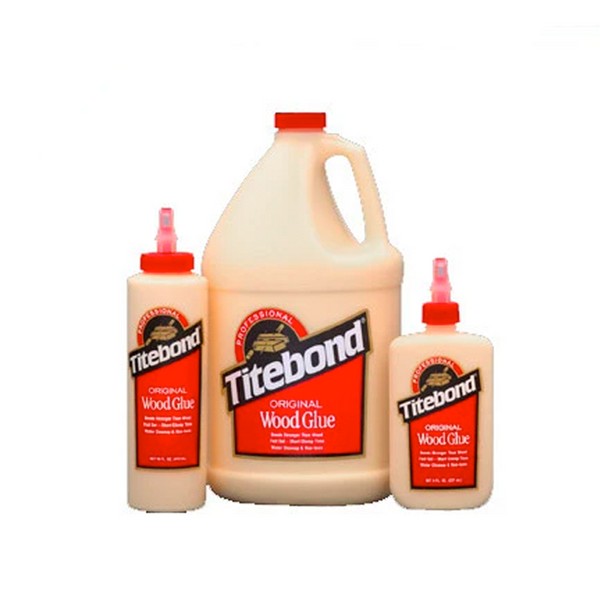
Polyvinyl acetate glue — white “PVA” and its cream-to-yellow aliphatic resin cousin, the everyday “wood glue” — is the workhorse of the modern hobby build. Its virtues are exactly the ones a beginner needs: a long open time (minutes of adjustment, the opposite of hot hide glue’s 1–2 minutes), water cleanup (a damp rag lifts the squeeze-out before it sets), it is cheap, and it is non-toxic (jsart125, Spehar). Its limitations are equally clear: it will not bond non-porous surfaces — it needs to soak into wood or a porous material to grip, so it fails on metal, most plastics, and coated fabrics — and it is not reversible in any practical, damage-free way.
The corpus states the recommendation directly: “Plain wood glue is what John Smith recommends for most of the Busker Organ build” (jsart125, Spehar). The worked example is consistent with it — the John Smith Universal Organ is built with PVA throughout: the ¼″ Baltic-birch-ply case, the ⅛″ ply pipe walls, the walnut pipe fronts, and the balsa/basswood pipes all go together with PVA (see “The John Smith Universal Organ” and the cross-reference in Vol 1). For a working hobby instrument that will be played, cranked, and occasionally knocked, PVA’s forgiving open time, easy cleanup, and low cost outweigh the loss of reversibility.
5.5.2 Epoxy — strongest, gap-filling, and overkill
Two-part epoxy — resin plus hardener, mixed just before use — is the strongest adhesive in the palette and the only one that reliably fills gaps (it cures as a rigid solid rather than needing a tight glue line, so it bridges a sloppy joint). It also bonds many of the non-porous surfaces PVA cannot. Its cost is that it is toxic (skin sensitizer and irritant; ventilation and gloves required), its cure time varies with the formulation and temperature, and — the corpus’s verdict — it is “overkill on a JS Busker” (jsart125, Spehar). It has its place for a specific stubborn metal-to-wood or load-bearing joint, but it is not a general assembly glue for a light wooden organ, and like the rest of the modern structural adhesives it is effectively irreversible.
5.5.3 CA (cyanoacrylate) — instant, and unforgiving
Cyanoacrylate — “superglue,” “CA” — gives an instant, strong bond on non-porous surfaces, exactly where PVA fails. Its costs are the mirror image of that speed: a very short open time (there is essentially no adjustment window; the parts grab where they first touch) and a bond that is near-impossible to clean up once cured (jsart125, Spehar). It is a spot adhesive for small, well-fitted, non-porous joints — a snapped fitting, a locating pin — not a construction glue, and it is one of the two adhesives in the palette that a restorer should regard as permanent.
5.5.4 Hot-melt — soft and fast
Hot-melt glue, applied molten from a glue gun, sets fast (short open time as it cools — superficially like hide glue, but the resemblance ends there) and dries soft (jsart125, Spehar). The soft, slightly rubbery cured bead makes it useful for tacking, jigging, temporary holds, and strain-relieving a wire, but it is not a structural wood glue: it lacks the hardness and long-term hold a load joint needs, and it creeps under sustained stress.
5.5.5 Copydex — the blackout-cloth exception
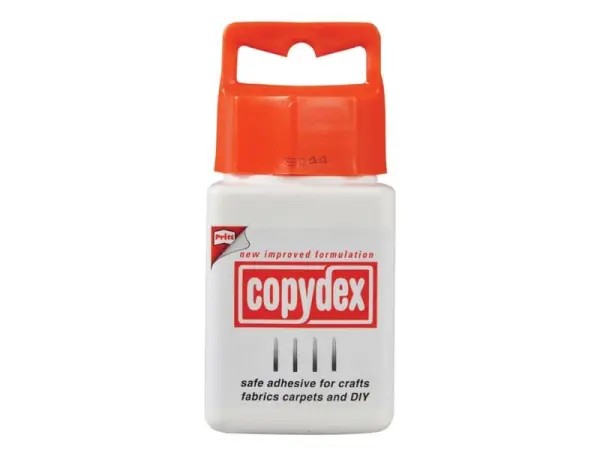
There is one place on the whole build where PVA simply does not work, and the corpus is emphatic about it. When a builder covers bellows with modern blackout cloth (the rubberised/coated fabric substitute for leather, sold in regular 54″ rolls — see Vol 3), PVA will not grip the coated surface. The solution is Copydex — a latex/rubber contact adhesive — applied to both faces with long clamping (jsart135, Melvyn Wright). By contrast, real bellows leather glues to itself and to wood “easily and quickly with ordinary PVA,” which is one of leather’s advantages in Wright’s classic-vs-modern comparison. So the rule is material-driven: leather bellows → PVA; blackout-cloth bellows → Copydex. The same latex-contact-adhesive logic, and its use on leather flap and gusset work, is covered from the leather side in Vol 3.
5.6 The teaching point: reversibility and the classic-vs-modern axis
Everything above sorts onto one axis the moment a restorer is in the room: can the joint be undone without damaging the object? This is the axis Jeff asked the dive to be built around, and it is where classic and modern part ways cleanly.
- Hide glue is the only fully reversible adhesive in the palette. Heat and moisture reopen it; fresh hot glue re-bonds it; the wood is never damaged (Player-Care hide Q&A; AIC WAG). Fish glue and liquid hide glue sit in the same reversible, conservation-friendly family.
- PVA and aliphatic glues are not practically reversible. They can be softened somewhat with heat and moisture but do not release cleanly, they tend to creep under sustained load, and separating a PVA joint usually means tearing wood fibres. For a working instrument this is a non-issue; for a future restorer it is a genuine obstacle.
- Epoxy and CA are effectively irreversible. Once cured they cannot be released without heat, solvents, or force that damages the surrounding material — the worst case for anyone who has to open the joint later.
From this axis the whole classic-vs-modern picture falls out, and it should be stated explicitly because it is the spine of the volume:
Classic antique organs are hide-glued. Modern hobby busker builds are PVA. The antique instrument was built with a reversible animal glue because that was the only glue there was — and, by lucky coincidence with modern conservation ethics, that is exactly the glue a restorer wants to find. The hobby build is PVA because a working instrument values a forgiving, cheap, strong, non-toxic joint over a reversibility its builder will likely never need — and, again, that is the builder’s own stated preference.
Neither is wrong. They are the correct answers to two different questions, and the matrix and decision rule below make the choice mechanical.
5.6.1 The adhesive comparison matrix (SVG)
Figure 5.2 — The classic-vs-modern adhesive matrix. Hide glue is flagged as the only fully reversible and conservation-approved adhesive; epoxy and CA are permanent; PVA sits in the middle (not reversible, but the working-build default). The decision arrows give the rule: museum-grade restoration goes to hide glue, a working hobby build goes to PVA.
5.6.2 The same matrix as a table
The table below carries the same comparison for readers who want it in text form, with a few extra practical columns (cleanup, and the primary busker use). “Rev.” is reversibility; “conserv.” is conservation suitability.
Table 1 — 5.6.2 The same matrix as a table
| Adhesive | Era | Rev.? | Open time | Set/cure | Heat/moist. resist. | Gap-fill | Toxicity | Cleanup | Conserv.-OK? | Primary busker use |
|---|---|---|---|---|---|---|---|---|---|---|
| Hot hide glue | classic | fully (heat + moisture) | ~1–2 min | sets as it cools; cures hard/brittle | low | no | none | warm water | yes | museum-grade restoration; antique organ joinery |
| Fish glue | classic | yes | long | air/water; hard | low | no | none | water | yes | cold-set classic joints; reversible alternative |
| Liquid hide glue | classic-style | yes | long | air; hard | low | no | none | water | yes | setting thin pouch/pneumatic leather (Vol 3) |
| PVA / aliphatic | modern | no (creeps) | long | set ~30 min, cure ~24 h (est.) | moderate | slight | none | damp rag (wet) | no | most of the busker build (John Smith) |
| Contact cement (Copydex) | modern | no | flash-off then instant | flash-off; long clamp | moderate | no | low–mod | difficult | no | gluing blackout cloth (jsart135) |
| Epoxy | modern | no (permanent) | varies | varies by mix | high | yes | toxic | solvent (wet) | no | stubborn metal/gap joints — “overkill on a JS Busker” |
| Hot-melt | modern | partly | very short | sets on cooling; stays soft | low (soft) | some | none | peel/scrape | no | tacking, jigs, temporary holds, strain relief |
| CA (cyanoacrylate) | modern | no (permanent) | instant | instant | moderate | no | mod. (fumes) | near-impossible | no | small non-porous spot repairs |
Figures marked (est.) — PVA set/cure times — are general woodworking values, not taken from a busker-corpus page; the load-bearing PVA facts (long open time, water cleanup, cheap, non-toxic, no grip on non-porous surfaces, not reversible, John Smith’s recommendation) are from jsart125 (Spehar). Hide-glue figures are quoted exactly from Player-Care, Popular Woodworking, and Tools for Working Wood.
5.7 The decision rule
The whole volume reduces to a short rule, stated two ways.
By intent:
- Restoring an antique organ to conservation standard, or wanting the instrument to remain repairable indefinitely → hot hide glue (with fish glue or liquid hide glue where a cold, longer-open-time reversible glue is wanted, e.g. setting pouch leather).
- Building a working hobby busker organ to play → PVA / aliphatic wood glue for most of the build — John Smith’s own recommendation — with Copydex reserved for blackout cloth, and epoxy/CA/hot-melt kept for the specific spot jobs they suit.
By material and joint:
Table 2 — By material and joint:
| Situation | Adhesive | Why |
|---|---|---|
| Antique organ joinery, any structural joint on a conservation job | hot hide glue | fully reversible; hard/brittle; breaks without damaging wood; lasts centuries |
| Setting thin pouch/pneumatic leather (restoration) | liquid hide glue | reversible; long open time; matte side to wood (Vol 3, Vol 7) |
| Most joints on a working busker build (ply case, pipe walls, pipe fronts, wooden pipes) | PVA / aliphatic | long open time, water cleanup, cheap, non-toxic, strong on porous wood (John Smith) |
| Gluing leather bellows to wood or itself | PVA | leather takes PVA “easily and quickly” (jsart135) |
| Gluing blackout/bellows cloth | Copydex (contact cement) | PVA will not grip the coated cloth (jsart135) |
| A stubborn metal-to-wood or gap-bridging joint | epoxy (sparingly) | strongest + gap-filling, but toxic and usually overkill |
| A small, well-fitted non-porous spot repair | CA | instant on non-porous; but permanent and near-impossible to clean |
| Temporary tack, jig, or strain relief | hot-melt | fast, soft, removable-ish; never structural |
The rule is not a verdict on which tradition is superior. It is a mapping from what the instrument is for to what belongs in the glue joint. A hide-glued antique and a PVA-glued busker organ are both correctly built. The error to avoid is the mismatch: reaching for epoxy or CA on an instrument that a future restorer will want to open, or reaching for a fussy hot glue pot on a Saturday hobby build that would be better served by a squeeze bottle of yellow glue.
5.8 Practical notes and hazards
A few working cautions gather the loose ends of the volume:
- Do not mix reversible and irreversible glues in the same instrument carelessly. A future restorer who steams open a hide-glued joint and hits a hidden CA or epoxy repair loses the reversibility the rest of the instrument offered. If a modern permanent adhesive must be used on an otherwise hide-glued antique, it should be documented (see Vol 7 on documentation as a conservation obligation).
- Non-porous surfaces defeat PVA silently. A joint that seems to hold at set can peel later because the glue never had a porous surface to key into. Coated cloth, metal fittings, and many plastics need Copydex, epoxy, or CA — not wood glue.
- Hide glue is a consumable with a shelf life. Mixed glue spoils (it is an animal protein — it can grow mould and lose strength over days at room temperature); it is mixed in working quantities and not hoarded. Dry granules keep well.
- Ventilation and skin protection matter for epoxy (sensitizer) and CA (fumes, and it bonds skin instantly). PVA, aliphatic glue, hide glue, and fish glue are non-toxic and need no special precautions beyond ordinary cleanliness.
- Clamp discipline is set by open time, not by the glue’s name. Hot hide glue’s 1–2 minutes demands a rehearsed, clamps-ready glue-up; PVA’s long open time forgives a fumbled one. Plan the assembly around the shortest open time in the joint.
5.9 Where this connects
- The John Smith Universal Organ — the worked busker example, built with PVA throughout (¼″ Baltic-birch-ply case, ⅛″ ply pipe walls, walnut pipe fronts, balsa/basswood pipes). It is the concrete instance of the “working hobby build → PVA” arm of the decision rule.
- Vol 3, “Leathers & Flexibles” — owns the leather side of the adhesive story: PVA on real bellows leather, Copydex on blackout cloth (jsart135, Wright), and liquid hide glue for setting thin pouch/pneumatic leather matte-side to the wood.
- Vol 7, “Antique-Organ Restoration” — owns the reversibility principle in full (Karp’s “easily and completely undone”), minimal intervention, and the documentation obligation. This volume supplies the why hide glue that Vol 7’s ethics demand.
- Vol 1, “The Material Palette,” and The Hobby Crank Organ dive — place the glue choice in the wider classic-vs-modern material picture (tawed/sheep leather vs blackout cloth; solid wood vs ply/MDF; spotted metal/zinc vs modern substitutes).
5.10 Summary
Hot hide glue is the classic organ’s adhesive: an animal-collagen glue graded by gram strength (the standard, cheapest general-purpose grade being 192), applied hot from a pot, with a working window of only about 1–2 minutes because it sets as it cools and shrinks further as gram strength rises. It makes a hard, brittle bond that breaks apart without damaging the wood, can last centuries, and — the property that decides everything — is fully reversible with heat and moisture (and by adding fresh glue). Fish glue and liquid hide glue share that reversible, conservation-friendly character in a cold, longer-open-time form.
The modern palette is what the hobby builder actually uses: PVA / aliphatic wood glue for most of the build (long open time, water cleanup, cheap, non-toxic, but no grip on non-porous surfaces and not reversible) — John Smith’s own recommendation for the busker organ; epoxy for the rare gap-filling or metal joint but toxic and usually overkill; CA for instant non-porous spot repairs but permanent and impossible to clean; hot-melt for soft, temporary tacks; and Copydex for the one job PVA cannot do — gluing blackout cloth.
The teaching axis is reversibility. Hide glue is the only fully reversible adhesive; epoxy and CA are effectively irreversible; PVA is not practically reversible and creeps. So classic antique organs are hide-glued and modern hobby busker builds are PVA — and the decision rule follows directly: museum-grade restoration → hide glue; working hobby build → PVA. Present both; neither is wrong.
Comments (0)