Materials Construction And Restoration · Volume 3
Materials, Construction & Restoration — Vol 03: Leathers & Flexibles
A mechanical organ is, at its core, a machine for moving air in a controlled way, and every point where that air is stored, gated, sensed, or turned into motion is sealed by something flexible. Wood makes the boxes and the pipes; metal makes the pins, the springs, and the alloy resonators; but it is a thin, supple skin — or, in modern practice, a coated cloth — that makes the whole thing airtight and responsive. Get the flexibles wrong and a beautifully built organ wheezes, sticks, robs the pipes of wind, or falls silent within a season. Get them right and the same instrument holds pressure for decades.
This volume owns the material side of the flexibles: which skin or cloth goes where, how it was tanned (or tawed) and why that governs how it ages, and the classic-versus-modern choices a hobby builder or restorer actually faces at the bench. It deliberately does not re-derive the mechanics of the bellows, feeder, and reservoir — how they pump, how they regulate pressure, how the springs are set — which belong to the Wind Systems dive; nor does it teach the step-by-step re-leathering technique, which is Vol 7 (Antique-Organ Restoration) of this dive. Here the question is narrower and prior to both: given a bellows, a pouch, a pneumatic, or a valve flap to cover, what material is correct, and what does it cost you over time?
The organizing theme, as in every volume of this dive, is classic versus modern. The classic column is thin sheep or lamb skin and alum-tawed white leather, glued with animal glue — the material vocabulary of the 19th- and early 20th-century organ trade. The modern column is rubberized “bellows cloth” and polyurethane-coated fabric, glued with a latex contact cement — cheaper, more uniform, and entirely serviceable on a working hobby instrument. Both columns are legitimate. The builder’s job is to know which is which and to choose deliberately.
3.1 What the flexibles have to do
Before assigning materials it helps to state the four jobs a flexible material is asked to do inside a small crank organ, because each job has a different priority and therefore a different ideal skin.
- Bellows and reservoir hinges / gussets — large flexing panels and the folded corners that let a feeder or reservoir open and close through thousands of cycles. The priority is fatigue life and airtightness under repeated flexing, with some ability to stretch into a corner without wrinkling.
- Pouches — small circular diaphragms, each a thin disc of leather sealing a well in the chest that lifts a valve when air is admitted beneath it. The priority is suppleness and low mass: a pouch must respond to a small pressure change instantly and repeatedly, so it has to be very thin, very flexible, and — above all — not leak, because the whole point of a pouch is to hold a pressure difference across its face.
- Pneumatics — small hinged bellows (a “motor” the size of a matchbox to a paperback) that collapse when exhausted and do mechanical work: opening a valve, striking, or advancing a mechanism. The priority is a flexible, airtight, low-porosity covering that folds cleanly at the hinge.
- Valves and flaps — thin leather faces that seat against a hole to seal it, or hinged flaps that act as one-way air gates. The priority is a soft, flat, gap-conforming sealing face and, for a flap, low mass so it responds quickly.
The wind these parts work against is modest — roughly 5 in H₂O (≈ 127 mm, ≈ 1.245 kPa) on a typical busker/street organ, the figure kept consistent with the Wind Systems dive — but the tolerance for leakage is not modest at all. Air lost through a porous pouch or a wrinkled bellows corner is wind the pipes never receive, and on a hand-cranked instrument that wind is expensive: it comes straight from the operator’s arm.
3.2 Which leather goes where
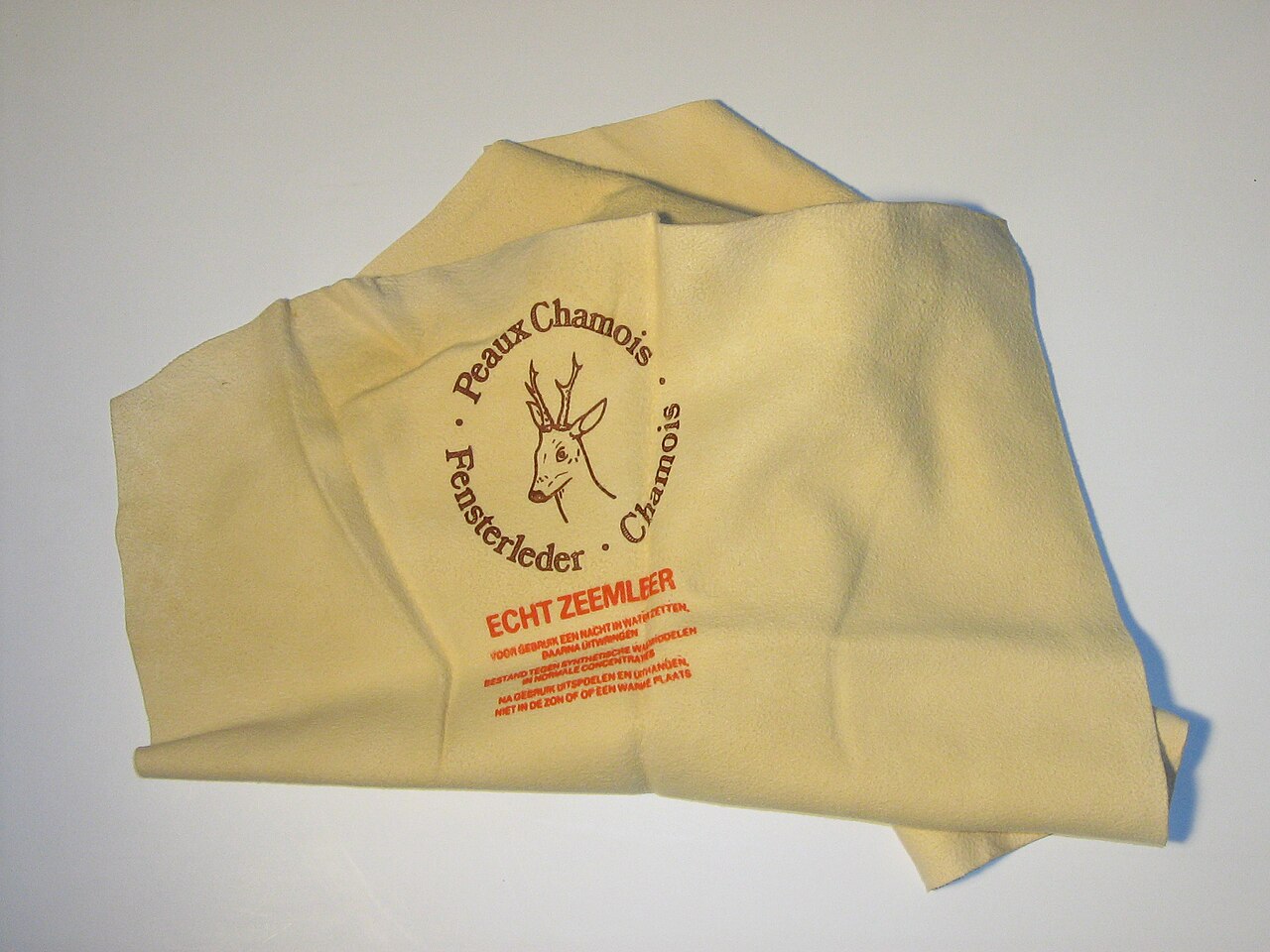
The single most useful thing a builder can carry to the bench is a correct mental map of which skin belongs at which job. The organ-leather trade sorts its stock almost entirely by thickness and by how far the pores have been sealed, and the hobby corpus follows the same logic with a shorter parts list.
3.2.1 Bellows → thin sheep / lamb skin
The classic covering for bellows and reservoir folds is thin sheep or lamb skin. The 31-note hobby build documents this choice explicitly: “This time I wanted to make the bellows as original as possible. That means that I have used sheep leather for the bellows.” (en_31toets). Sheepskin is the traditional bellows leather because it is thin and supple enough to fold without cracking yet tough enough to survive repeated flexing, and it stretches to take up a corner — it can be eased into the fold of a gusset without wrinkling, which a woven cloth cannot do (jsart135, Melvyn Wright).
Its drawback is that it arrives as small, irregular natural pieces, each with its own thin spots, edges, and the occasional flaw, so a large bellows may have to be built up from several sheets glued together and inspected for holes. That inconvenience is the opening for the modern substitute discussed in §4.
3.2.2 Pouches and pneumatics → very thin, sealed-pore pneumatic / pouch leather
Pouches and pneumatics are covered with a distinct grade: very thin sheepskin whose pores have been deliberately sealed to cut air porosity. The trade benchmark is Columbia Organ Leathers’ stock of African Hairsheep skins, imported and then tanned in the United States to organ-supply specification — the industry standard for pipe-organ pneumatics. Their CTL Tan Pneumatic Leather goes through a special process that seals the pores to reduce air porosity (Columbia Organ Leathers). That pore-sealing is exactly the property a pouch needs: a raw, open-pored skin thin enough to flex freely would also breathe air straight through its face, and a leaky pouch cannot hold the pressure difference it exists to sense. The same house will custom-cut pouches and flap valves and also supplies kangaroo for the thin-and-strong niche (see §2.4).
The distinction between bellows leather and pouch leather is therefore not just thickness but finish: bellows leather can be a little thicker and need not be pore-sealed because a multi-ply, glued-up bellows wall is airtight by construction; pouch and pneumatic leather is chosen thin and sealed because a single unsupported disc or a small folding motor has nothing behind it to stop a leak.
3.2.3 Valves and flaps → thin leather or hobby membrane leather < 0.5 mm
Valve faces and flap valves use a thin leather whose job is to lie flat and seal a hole. In the hobby parts world this appears as “membrane leather thinner than 0.5 mm” offered specifically for the amateur builder (en_materiaal). Below about 0.5 mm the skin is light enough to respond quickly as a flap yet still presents a soft, slightly compressible face that conforms to a valve seat and closes it airtight. This is the smallest, thinnest, least demanding of the four jobs in terms of area, but the most demanding in terms of flatness and low mass.
3.2.4 Kangaroo / kid → where a very thin, strong skin is wanted
A fourth niche appears wherever a covering must be both very thin and unusually strong — thinner than sheepskin can go without tearing at the flex line. Kangaroo is the classic answer: at roughly 1 mm / under 3 oz (est. for the exact organ-grade skin) it is markedly thinner than a comparable cowhide of the same strength because kangaroo hide has a uniform, tightly interwoven fibre structure and little of the weak grain layer that forces other leathers to be left thick for strength. Columbia stocks kangaroo alongside its sheepskins for precisely this reason. Historically kid (young goat) served the same thin-and-strong role in fine mechanisms. These are specialty choices, not the everyday bellows or pouch skin, and a hobby build will usually never need them — but a restorer matching an unusually thin original covering should know the option exists.
Leather-thickness sanity note. The organ-leather trade quotes skins in both millimetres and the leather-trade ounce (1 oz ≈ 1/64 in ≈ 0.4 mm of thickness). A “3 oz” skin is therefore about 1.2 mm; the ”< 0.5 mm” hobby membrane leather is roughly 1 oz or a touch over. Where an exact per-skin figure is not taken from a live catalog it is marked (est.) here, because published thicknesses vary by lot and by house.
3.2.5 The which-leather-where map, and how a pouch is set
The map above is worth fixing visually, because the commonest bench error is cross-assigning a skin — covering a pouch with bellows leather that is too thick to respond, or facing a bellows corner with pouch leather too thin to survive the flex. The diagram below pairs the tannage question (§3) with the placement question, so both can be read at a glance.
When a pouch is actually set, the trade convention — best documented in the closely related player-piano world — is specific and easy to get backwards. The pouch leather is installed matte (flesh) side to the wood, because the glossy grain side will not take glue and will not adhere; the glossy face is wrapped around a coin or forming disc to shape the small dome of the pouch, and the whole is set into the pouch well with liquid hide glue (Nola Piano). The next figure isolates that operation.
3.3 Tanning types, and why tannage decides how leather ages
The most consequential thing about a piece of organ leather is not its thickness or even its animal — it is how the raw hide was preserved, because that chemistry governs whether the skin stays supple for a century or crumbles to powder in a few decades. There are three families a builder or restorer meets, and they behave completely differently. The terminology matters: only two of the three are properly called tanning at all.
3.3.1 Alum-tawed (“tawed” / “white”) leather — the classic organ leather
Tawing is not tanning. A tawed skin is worked with aluminium salts (historically potassium alum, often with salt, egg yolk, and flour) rather than with tannins or chromium. The result is a soft, pliable, characteristically white leather, and the aluminium acts as a preservative that makes tawed skin notably resistant to the rot that afflicts vegetable-tanned leather (CCI Notes 8/2; MFA Cameo). This is why so much classic organ and bookbinding leather was tawed and white rather than acid-tanned: it stayed soft and it did not rot.
Tawing has one defining weakness, and it is the reason a builder must keep it straight from tanning: the alum treatment is water-reversible. Aluminium salts are not chemically bound into the collagen the way tannins or chromium are; they can be washed or leached out by water, so a soaked tawed skin can effectively un-taw and revert toward rawhide. Tawed skins are therefore moisture-sensitive and are traditionally dressed with fats and waxes to give them water resistance and to keep them supple (CCI Notes 8/2). The practical upshot: alum-tawed leather is the rot-resistant classic choice, but it must be kept dry and fed, and it should never be described loosely as “tanned.”
3.3.2 Vegetable-tanned leather — and the red-rot problem
Vegetable tanning binds the hide with plant tannins. It produces the firm, warm-brown leather of belts, saddlery, and tooling work, and in its own right it can last a very long time. The problem specific to organ (and bookbinding) leather is a degradation mechanism called red rot.
Red rot is the breakdown of vegetable-tanned leather into a red-brown powder: the collagen structure fails and the surface turns to dust that rubs off on the hands. The chemistry is that the tannins polymerize on reaction with sulfuric acid, and the acid attack is accelerated by high relative humidity, heat, and sulfur-dioxide air pollution (Red rot wiki; Conservation-Wiki). The historical sting is a matter of dates: after about 1850, liquid sulfuric-acid tanning processes came into use that stripped out the protective calcium salts the older methods left behind, so vegetable-tanned leather made roughly between 1850 and 1900 is especially susceptible to red rot (Red rot wiki). A great many antique organs and their reservoirs were leathered in exactly that window, which is why an old bellows so often greets a restorer as a leaking bag of red dust. This is the single most important reason tannage matters when choosing re-leather stock: an inappropriate vegetable-tanned skin can begin failing on the same timescale as the original it replaced.
Guardrail. Red rot is a vegetable-tan disease, driven by sulfuric acid in skins made about 1850–1900. It is not a property of alum-tawed leather — tawed leather is rot-resistant (its own failure mode is moisture sensitivity, not red rot). Do not attribute red rot to alum, and do not call tawed leather “tanned.”
3.3.3 Chrome tanning — the modern general tannage
Chrome tanning uses chromium(III) salts and is the dominant modern general tannage: fast, cheap, producing a soft, supple, heat- and water-resistant leather. Most leather a builder buys today for general use is chrome-tanned. It is stable and does not suffer red rot, but it is the modern answer, not the classic organ material, and its softness and stretch behavior differ from a thin tawed sheepskin. For a working hobby bellows it is entirely serviceable; for a museum-grade like-for-like restoration a tawed or trade-specification pneumatic skin is the correct match.
3.4 Modern substitutes — blackout cloth and coated fabrics
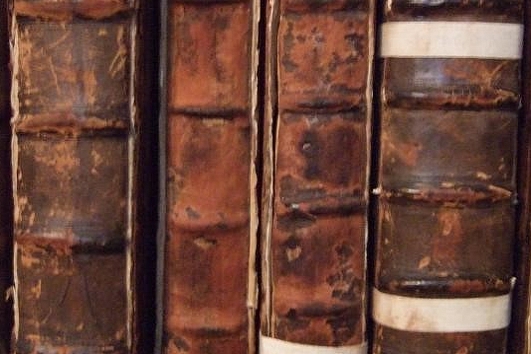
The modern column of the flexibles story is dominated by coated cloth, and the canonical comparison for the hobby builder is Melvyn Wright’s article Leather or Blackout Cloth? (jsart135, Melvyn Wright), which weighs the two options for covering bellows honestly.
Leather is tougher and longer-lasting, and because it is a little thicker it is more airtight. Critically it stretches to take up a corner, easing into a gusset fold without wrinkling, and it glues readily to itself and to wood. Its downsides are cost and form: it comes in small, oddly-shaped natural pieces with holes and imperfections, so a large bellows must be built up from several sheets glued up and inspected.
Blackout cloth — a rubberized/coated fabric sold for lightproofing curtains and pressed into service as “bellows cloth” — is much cheaper, comes in regular 54-inch (≈ 1.37 m) rectangular rolls, is thin and easily scissor-cut, and is uniform and dimensionally stable so it holds its shape. Its defining catch is adhesive: PVA (white wood glue) does not stick to it well, because its rubberized face is effectively non-porous. Wright’s solution is to glue blackout cloth with Copydex — a latex/rubber contact adhesive — and to clamp it for a long time (jsart135, Melvyn Wright). This is a specific, load-bearing detail: the modern cloth brings a modern adhesive requirement with it, and a builder who reaches for the PVA that works everywhere else on the organ will find the cloth peeling.
The player-piano trade extends the same modern menu with rubberized bellows cloth and polyurethane-coated fabric as standard recovering materials for pneumatics and bellows — the coated-fabric family that fills the role a thin tawed skin once held.
The decision rule is simple and worth memorizing:
Rule of thumb (jsart135). Small and/or heavily-used bellows → leather (its airtightness, toughness, and corner-stretch earn their cost where the part works hardest). Large and/or light-use bellows → blackout cloth (its low cost, uniformity, and 54-inch rolls win where a big panel flexes gently).
3.5 Adhesive pairing — which glue holds which flexible
Because the flexibles are the one place where the material and its adhesive are inseparable, a short note here (the full glue treatment is Vol 5, Glues & Adhesives). Three pairings cover almost everything:
- Leather to wood / leather to leather — PVA works well and is what most of the hobby build uses, gluing quickly and cheaply because leather is porous on its flesh side. Where reversibility matters — a pouch, a pneumatic on an antique, any museum-grade job — liquid hide glue is used instead, because it can be released later with heat and moisture for the next re-leather (Nola Piano).
- Pouch leather — installed matte side to the wood (the glossy grain will not adhere) and set with liquid hide glue (Nola Piano). See Figure 3-2.
- Blackout / rubberized cloth — Copydex (latex contact adhesive), not PVA, which will not grip the non-porous coated face (jsart135, Melvyn Wright).
The teaching point that runs through the whole dive appears here in miniature: PVA is the convenient modern default and hide glue is the reversible classic choice, and the material in hand often decides which is even possible — blackout cloth forces a contact cement, a glossy pouch face forces the flesh side down, and an antique that must stay reversible forces hide glue.
3.6 Reference table — flexibles at a glance
Table 1 — 6. Reference table — flexibles at a glance
| Flexible material | Where used | Classic / modern | Tannage & notes |
|---|---|---|---|
| Thin sheep / lamb skin | Bellows, reservoir folds & gussets | Classic | Traditionally alum-tawed; supple, stretches to corners; used to be “as original as possible” on the 31-note build (en_31toets) |
| Pneumatic / pouch leather (African Hairsheep, CTL Tan) | Pouches, pneumatics, flap valves | Classic (trade standard) | Very thin, pore-sealed to cut air porosity; the pipe-organ pneumatic benchmark (Columbia Organ Leathers) |
| Membrane leather < 0.5 mm | Valve faces & flaps | Classic-style hobby stock | Thin, light, conforms to a valve seat; sold for amateur builders (en_materiaal) |
| Kangaroo / kid | Thin-and-strong special cases | Classic specialty | Kangaroo ≈ 1 mm / < 3 oz (est.), thinner-but-strong vs cowhide; kid for fine work (Columbia Organ Leathers) |
| Alum-tawed (“white”) leather | Any classic covering; conservation re-leather | Classic | Aluminium salts, not tanned; rot-resistant but moisture-sensitive / water-reversible; dressed with fats/waxes (CCI Notes 8/2) |
| Vegetable-tanned leather | Older / antique coverings | Classic (problematic) | Tannin-tanned; prone to red rot, worst c. 1850–1900 acid-tanned skins (Red rot wiki) |
| Chrome-tanned leather | General modern leather | Modern | Chromium salts; stable, no red rot; the modern general tannage — serviceable, not a museum match |
| Blackout / rubberized “bellows cloth” | Large / light-use bellows | Modern | 54-inch rolls, cheap, uniform; glue with Copydex, not PVA (jsart135, Melvyn Wright) |
| Polyurethane-coated fabric | Pneumatics & bellows recover | Modern | Player-piano trade standard coated fabric |
3.7 Choosing, on the bench
The choice of flexible is a small negotiation between four factors — authenticity, airtightness, cost, and reversibility — and the classic-versus-modern axis maps onto them cleanly. A restorer of an antique working toward museum standards weights authenticity and reversibility: thin tawed sheepskin or trade-specification pneumatic leather, set with liquid hide glue, matching the original as closely as the surviving evidence allows, and kept reversible so a future conservator with better knowledge can undo the work. A hobbyist building or maintaining a playing busker organ can legitimately weight cost and convenience: sheep leather where it works hardest, blackout cloth on the big light-use panels, PVA where it grips and Copydex where it must. Neither is “wrong”; the 31-note builder chose sheepskin to be as original as possible (en_31toets), while Melvyn Wright reaches for blackout cloth on the large bellows and never apologizes for it (jsart135). What is wrong is choosing without knowing the trade-offs — covering a hard-working small bellows in cheap cloth that will not hold air, or re-leathering a museum piece in a chrome-tanned skin and a PVA that a future restorer can never cleanly remove.
Two guardrails deserve repeating because they are the errors most often made in print. First, tannage vocabulary: alum-tawed leather is not “tanned,” it is the rot-resistant classic organ leather whose weakness is moisture, not rot; red rot is a vegetable-tan disease of sulfuric-acid skins from about 1850–1900; chrome is the modern general tannage. Second, which-leather-where: sheep for bellows, thin sealed sheepskin for pouches and pneumatics, membrane leather under 0.5 mm for valves, kangaroo or kid only where a very thin strong skin is genuinely needed — never cross-assigned.
3.8 Cross-references and where this leaves off
This volume has covered only the material: what each flexible is, how it was made, how it ages, and which classic or modern option is correct for each job. It stops deliberately at two boundaries.
- The mechanics of the bellows, feeder, and reservoir — how they pump, how the springs are set (the hobby build’s 8-pound bellows spring, en_materiaal), how the reservoir regulates the ~5 in H₂O (≈ 127 mm ≈ 1.245 kPa) wind, and how the folds are laid out — belong to the Wind Systems dive. This volume names the leather; Wind Systems drives it.
- The technique of actually re-leathering a bellows, a pneumatic, or a pouch — stripping the old covering, cleaning the frames, cutting and forming the new skin, the matte-side-down pouch set of Figure 3-2 in full step-by-step form — belongs to Vol 7, Antique-Organ Restoration, where it sits beside the conservation ethics (reversibility, minimal intervention, documentation) that decide when the classic and when the modern material is the right call.
Read together, the three give the whole picture: this volume says what the skin is and why it ages as it does, Wind Systems says what it does under pressure, and Vol 7 says how to renew it without destroying the instrument’s future.
Comments (0)