Materials Construction And Restoration · Volume 4
Materials, Construction & Restoration — Vol 04: Metals & Fasteners
A small hand-cranked busker organ is mostly wood, leather, and glue, and a newcomer to the corpus is often surprised at how little metal it contains. There is no cast-iron frame, no brass-heavy action of the kind a piano carries, and — the point this volume returns to repeatedly — usually no metal pipes at all. The metal in a typical 20- to 31-note crank organ is confined to a handful of load-bearing but unglamorous roles: the springs that set the wind, the pins and wire that register and articulate, the reed tongues in any reed rank, the screws and bolts that hold the carcase together, and the odd fitting or bearing. Yet each of those roles has a correct material, a classic-versus-modern choice, and a set of failure modes worth understanding before a restorer starts replacing parts.
The one place metal does dominate — the metal flue pipe, cast and rolled from tin-lead alloys or raised in zinc — belongs to the antique and large-organ side of the story, not to the hobby bench. Most busker and hobby organs voice their notes on wooden (beech) pipes, so the celebrated pipe-metal alloys are covered here as material context: what the antique instruments this program descends from were built with, why the alloy was chosen, and how to identify and conserve it if a restorer meets it. The making of any pipe, wooden or metal, is owned by the Building Organ Pipes dive, and why an alloy changes the tone is owned by the How Organ Pipes Make Sound dive; this volume cross-references both rather than re-deriving them.
The organizing theme, as in every volume of this dive, is classic versus modern. The classic column is cast tin-lead pipe metal, cold-rolled zinc for the basses, hand-drawn brass, tempered spring steel, and soft tin-lead solder. The modern column is the hobby builder’s substitutes: mild-steel or stainless screws and M6 bolts from the hardware shop, aluminium where lightness is wanted, and plated steel spring wire bought by the pound. Both columns are legitimate; the builder’s job is to know which is which.
4.1 What metal actually does in a crank organ
Before assigning alloys it helps to list the jobs metal is asked to do inside a small mechanical organ, because each job has a different mechanical demand and therefore a different ideal material.
- Springs — the reservoir/regulator spring that sets wind pressure, feeder return springs, valve and pallet springs, and pouch-return or key springs. The demand is a repeatable, fatigue-resistant elastic force over tens of thousands of cycles. This is the domain of spring steel and piano (music) wire. The mechanics of how these springs regulate the wind belong to the Wind Systems dive; this volume covers only the wire itself.
- Pins, pivots, and register rods — locating pins, hinge pins, tracker/register pins, and the small rods that couple the keyframe or crank mechanism. The demand is hardness, straightness, and corrosion resistance in a thin section. This is the domain of brass rod and pin wire, occasionally hardened steel.
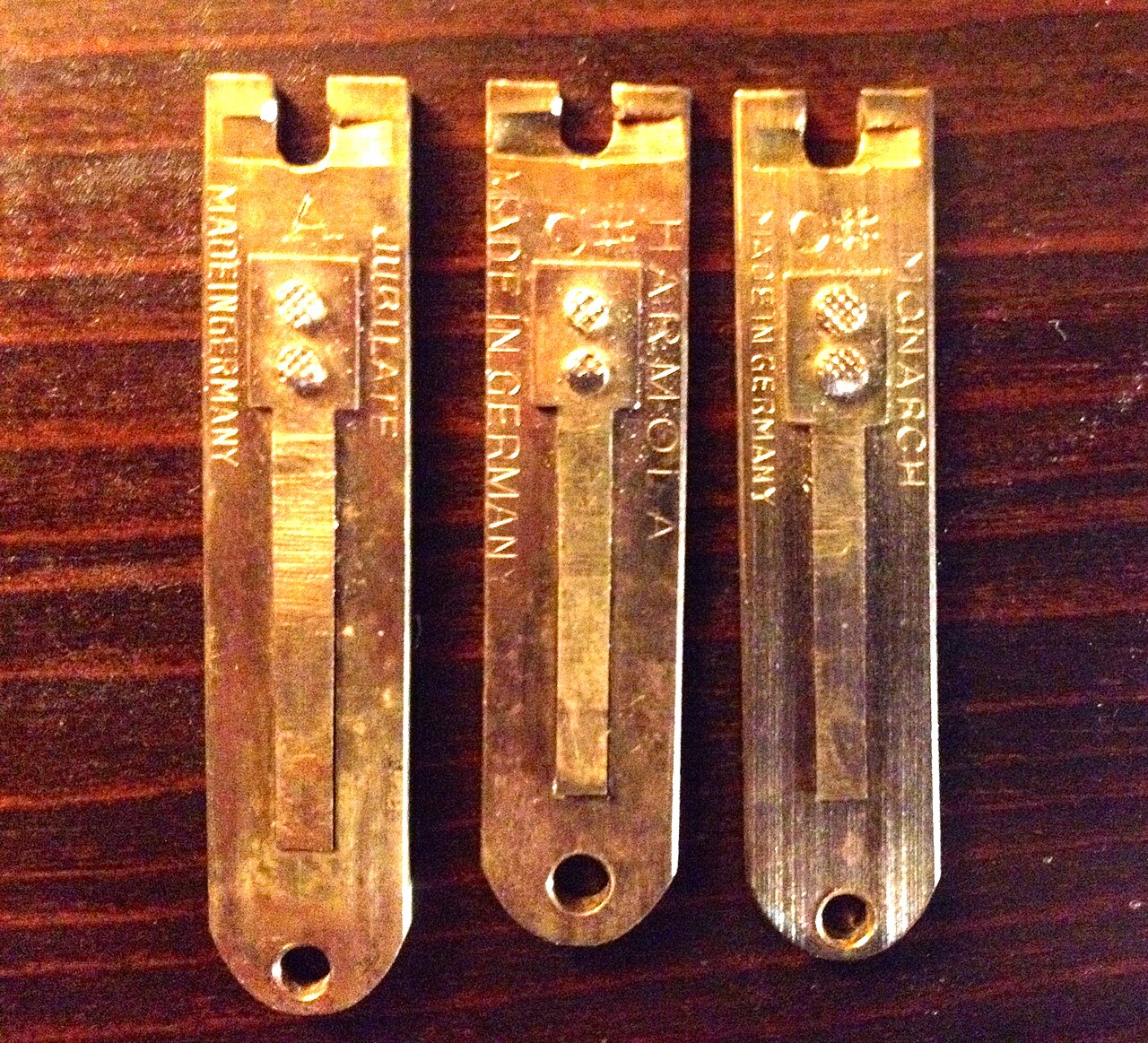
- Reed tongues and freins — in any reed rank (accordion-style or free reeds), the vibrating tongue and the tuning frein (the sliding wire that shortens the speaking length). The demand is a stable, springy, corrosion-resistant thin strip and wire. This is the domain of brass and blued spring steel; the tuning use is owned by the Tuning & Voicing dive, which this volume cross-references.
- Pipe bodies (antique / large-organ only) — the flue resonator itself, where it is metal rather than wood. The demand is a material that can be cast, rolled thin, and voiced and whose density and stiffness suit the desired tone. This is the domain of tin-lead pipe alloys and zinc.
- Fasteners — screws, bolts, and the occasional threaded insert holding the
carcase, chest, and mechanism together. The demand is simply adequate
clamping strength and corrosion resistance. This is the domain of steel,
brass, and — on the hobby build — M6 hardware (
en_materiaal).
Two of those five jobs — springs and fasteners — account for nearly all the metal a hobby builder handles. Pins and reed parts are next. Pipe alloys, for the busker builder, are a topic one reads about rather than works with, and the volume is framed accordingly.
4.2 Metal pipe alloys — the antique and large-organ side
The metal flue pipe is one of the oldest and most refined objects in the entire
mechanical-organ tradition, and its alloys are worth knowing precisely. But the
framing must be kept honest: a busker or hobby crank organ almost never has
metal pipes. The hobby corpus voices its ranks on wooden pipes — beech front
slats and softwood bodies (en_pijp), and the John Smith Universal build uses
balsa/basswood pipes with walnut fronts throughout (kept identical to that dive).
Metal pipes belong to the large fairground, dance, and church organs from which the
busker instrument is descended, and to the occasional metal rank a builder might
salvage or commission. What follows is therefore antique material science, offered
so a restorer can identify and conserve a metal pipe — not a shopping list for a new
busker build. The making of these pipes is owned by Building Organ Pipes.
4.2.1 The tin-lead family
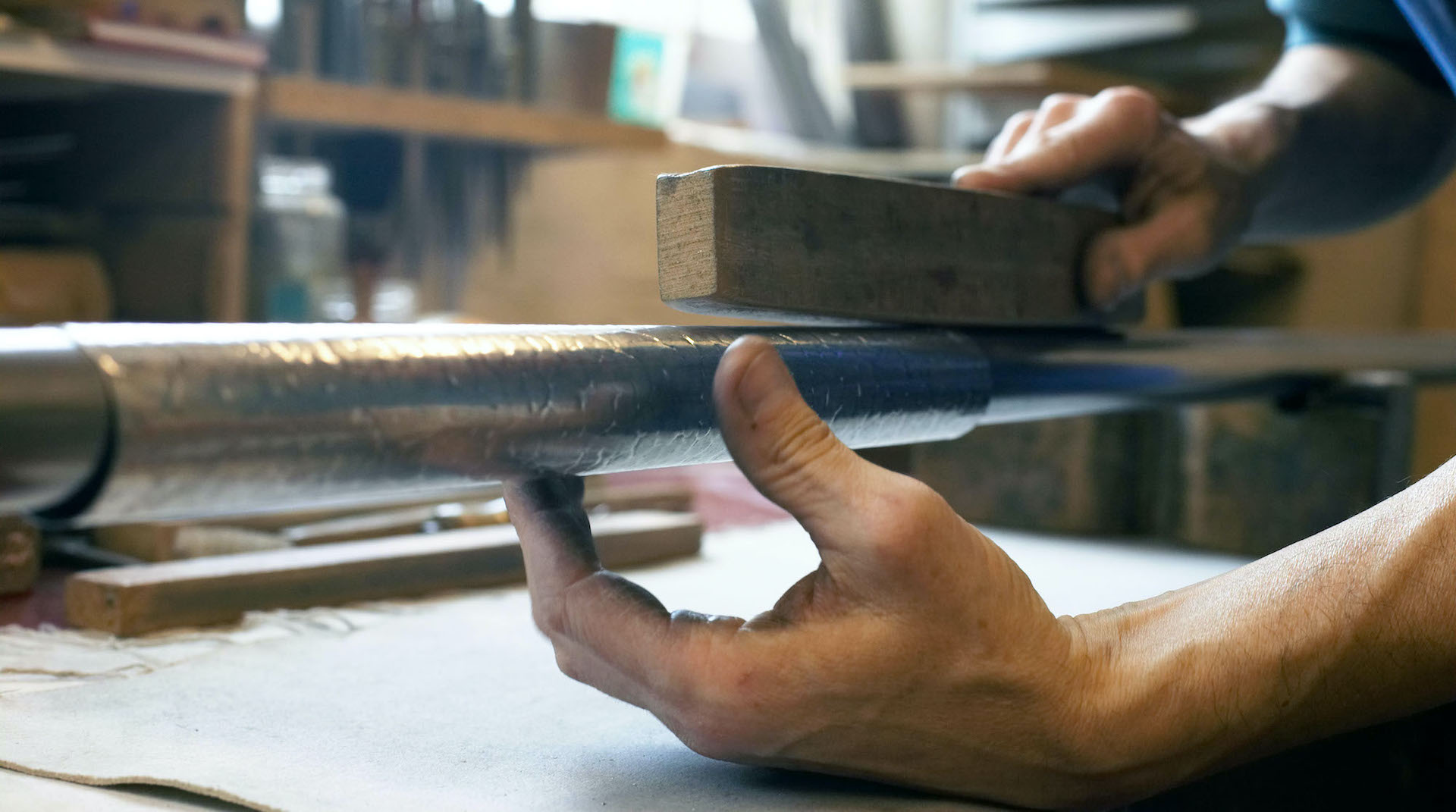
Nearly all classic metal flue pipes are cast from an alloy of tin and lead, run molten onto a casting bench, cooled into a sheet, planed to thickness, and rolled and soldered into a tube. Tin and lead form a simple binary system with a eutectic near 62 % tin, and — crucially for the pipe-maker — the two metals are only partly soluble in each other in the solid state, so the way the sheet freezes leaves a visible crystalline structure on its face. The tin/lead ratio is the single most important material variable, because it governs three things at once: the density and stiffness of the wall (which affects tone — cross-ref How Organ Pipes Make Sound, do not re-derive), the workability of the sheet at the bench, and the cost (tin being far dearer than lead). C. B. Fisk’s essay on pipe metal is the classic builder’s meditation on exactly this trade-off (C.B. Fisk).
The named alloys of the trade, from lead-rich to tin-rich, are:
- Common metal ≈ 30 % tin / 70 % lead. The workaday alloy for interior and economy ranks: soft, easy to cut and roll, dark grey, and cheap because it is mostly lead. Ranges of roughly 20–40 % tin are all loosely called “common metal” (OHS works21; toff.org.uk; grokipedia).
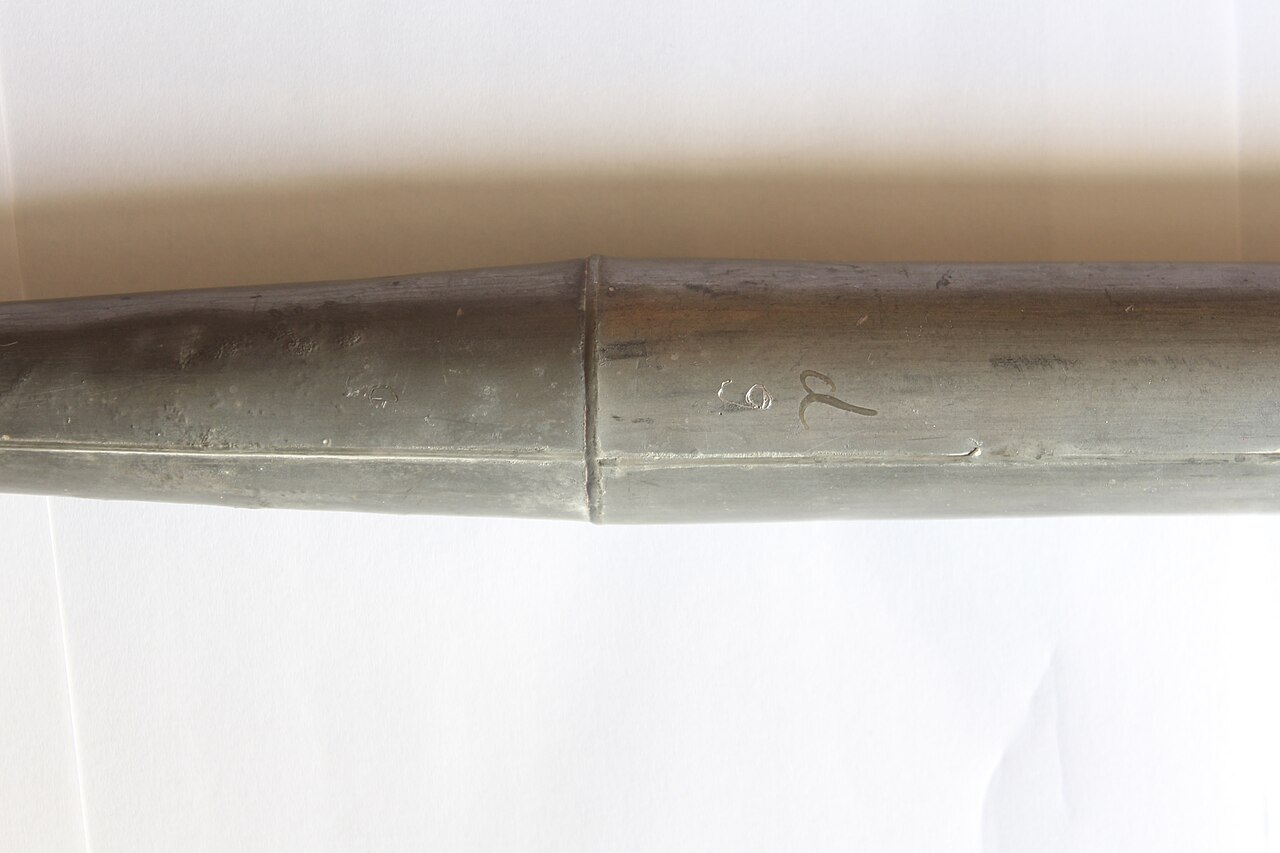
- Spotted metal ≈ 50/50 tin-lead. The most recognisable organ metal, prized for façade and principal ranks. The characteristic large crystalline “spots” or mottling on its surface appear in the 45–55 % lead range, where the alloy freezes with large primary crystals that etch out as visible spots after the sheet is pickled. The spots are a diagnostic of the ratio: their presence tells a restorer the pipe is close to half-and-half (OHS works21; toff.org.uk).
- Plain / high-tin metal ≈ 75 % tin / 25 % lead. A bright, hard, ringing metal for the finest principal and string ranks — expensive, stiff, and slower to work. Very high-tin pipes approach the look and ring of pure tin. (Confusingly, some trade usage also calls high-tin metal “spotted,” but the visible spots are a ~50/50 phenomenon; the high-tin sheet reads as a bright uniform surface.) (toff.org.uk; grokipedia.)
- Antimonial lead ≈ 94 % lead / 6 % antimony. A lead hardened with a few percent antimony rather than with tin — a cheaper way to stiffen a soft lead pipe without paying for tin. It reads as a dull grey and is used where a lead-like tone is wanted with a little more rigidity (OHS works21; grokipedia). Exact antimony fractions vary from batch to batch; the 6 % figure is the customary nominal (est.).
4.2.2 Zinc for the basses
Cast tin-lead sheet becomes impractically heavy and floppy at large scale, so the big bass pipes — customarily those longer than about 4′ C — are made instead of zinc. Zinc sheet is stiff, light for its strength, and cheap; it is cold-rolled into sheet, cut, rolled into a cylinder, and soldered up the seam, then usually fitted with a cast tin-lead or wooden mouth and foot (OHS works21). A restorer meets zinc as the tall, dull blue-grey speaking pipes at the bass end of a rank, often oxidised to a matt film. Zinc’s failure mode is white zinc corrosion at seams and feet where moisture collects, and mechanical fatigue cracking along old solder lines in a pipe that has been repeatedly moved. The 4′ crossover is a custom, not a law — some builders go metal higher or zinc lower — but “zinc for pipes above about 4′ C” is the reliable rule of thumb (OHS works21).
4.2.3 Why the alloy matters — pointer, not derivation
The tin/lead ratio matters to tone because it changes the wall’s density and stiffness and therefore how the resonator’s body responds and radiates — a high-tin wall rings and supports bright, prompt strings and principals, while a lead-rich wall damps and rounds the tone. It matters structurally because lead-rich pipe metal creeps under its own weight over decades, so tall old lead pipes lean, buckle at the mouth, and collapse at the foot; tin and antimony both resist that creep. These are precisely the points C. B. Fisk develops (C.B. Fisk). The full acoustic mechanism — how wall material couples into the air column and the mouth’s edge tone — is owned by How Organ Pipes Make Sound, and this volume deliberately does not re-derive it. The takeaway for a restorer is diagnostic: read the alloy from the surface (spots ≈ 50/50; bright uniform ≈ high tin; dull grey and soft ≈ common or antimonial lead; blue-grey and stiff ≈ zinc) and expect the failure mode that alloy is prone to.
4.3 Solder — joining the metal seams
Where a metal pipe is made, its seam and its mouth-to-body and body-to-foot joints are closed with soft tin-lead solder, historically a tin-lead alloy chosen to melt below the pipe metal so the seam can be run without slumping the wall. This is the classic pipe-shop solder, wiped along the seam with a hot iron. The exact tin/lead of the solder is chosen for a melting range comfortably under the pipe alloy — commonly a tin-rich 60/40 or 50/50 stick — but specific historic shop formulas vary and are marked (est.) unless a maker’s record is on hand. Zinc basses are likewise soldered up the seam, with a flux suited to zinc.
The important modern caveat is health and reversibility. Classic solder is lead-bearing; a restorer handling it, and especially anyone melting it, follows lead-hygiene practice (ventilation, no ingestion, hand-washing). Whether a metal seam is soldered at all, versus the wooden-pipe world’s glued joints, is a joint choice this dive treats in Vol 5 (Glues & Adhesives) — solder is the metal analogue of a glued seam, permanent and strong but requiring heat to reverse, and Vol 5 sets it beside hide glue and PVA in the reversibility discussion. On the hobby bench, solder appears mainly for the odd electrical or mechanical joint, not for pipes, since the pipes are wood.
4.4 Brass — pins, reed tongues, freins, and fittings
Brass is the crank organ’s general-purpose non-ferrous metal, chosen wherever a part must be hard, dimensionally stable, non-magnetic, easy to work, and corrosion-resistant in a thin section. It appears as:
- Pins and pivots — locating pins, hinge pins, and register/tracker pins, drawn from brass rod or cut from brass pin wire. Brass resists the rust that would seize a steel pin in a humid instrument, and it wears against wood without staining. Typical small pins are a free-machining brass such as CuZn39Pb3 / C36000 (est.), which is the common rod and pin stock; the grade is rarely specified on a hobby build and is marked (est.) accordingly.
- Reed tongues — in an accordion-style or free-reed rank, the vibrating tongue is a thin springy strip. Classic reed tongues are brass, sometimes blued spring steel; brass is favoured for its stable spring temper and corrosion resistance. A reed-tongue alloy is typically a spring-temper brass or a specific reed brass; exact tempers are shop-specific and marked (est.).
- Freins (tuning wires) — the small sliding wire that bears on a reed tongue to shorten its speaking length and raise its pitch. Freins are brass or steel wire. Their use in setting pitch belongs to the Tuning & Voicing dive, which this volume cross-references rather than duplicating; here the note is only that the frein is a metal part and is usually brass for stability against corrosion.
- Fittings and bearings — bushings, small brackets, escutcheons, crank-shaft bushings, and decorative hardware. Brass is chosen for wear resistance and appearance.
Brass’s virtues are corrosion resistance and a stable spring temper; its main failure mode over long timescales is dezincification (selective loss of zinc from the alloy, leaving a weak porous copper residue) in wet or chloride-laden conditions, and stress-corrosion cracking in highly stressed, ammonia-exposed brass — both rare in a dry, well-kept organ but worth recognising in a water-damaged instrument. Where a modern builder substitutes, stainless steel pins or aluminium fittings sometimes stand in, trading brass’s traditional look for cost or availability.
4.5 Spring steel and piano (music) wire
The springs are where metal does the crank organ’s real work. Two families cover almost everything:
- Spring steel — high-carbon or spring-tempered steel in strip or wire form, used for flat and coil springs that must return a definite force many thousands of times. The reservoir/regulator spring that sets the wind, feeder return springs, and pallet/valve springs are all in this family.
- Piano (music) wire — a high-tensile, cold-drawn carbon-steel wire (the same stock used for piano strings), used for small tension and coil springs and for straight sprung wires. It is bought by gauge and cut/formed at the bench.
The hobby corpus makes the spring material concrete. The hobbycrankorgan.com parts
list sells a “Bellows spring 8 pound” (en_materiaal) — that is, a reservoir
spring rated to hold the reservoir open against roughly an 8 lb force, the mechanism
by which the wind pressure is set. (What that force does — how it regulates the
~5 in H₂O / 127 mm / 1.245 kPa wind and how it interacts with the feeder — is owned
by the Wind Systems dive and is not re-derived here; the reader should keep the
wind figure identical to that dive.) Reservoirs on other busker designs are sprung
with piano wire or small tension springs to the same end (jsart07, Geoffrey
Morriss). The tuning wires and freins mentioned above are the other common wire
use, and are owned by Tuning & Voicing.
Spring steel’s cardinal enemy is rust: a corroded spring loses temper, pits, and eventually snaps at a stress riser. Classic springs were often blued or lightly oiled; modern hobby wire is frequently plated (zinc or nickel) or stainless for corrosion resistance, which is the main classic-versus-modern substitution in this category. A restorer replacing a broken spring matches the force and free length, not the exact historic alloy, since a modern music-wire or stainless spring of the right rate does the same job.
4.6 Fasteners — screws, bolts, and the hobby M6 hardware
Fasteners are the least glamorous metal in the organ and, on a hobby build, the most
frequently handled. The classic instrument was assembled largely with glued
joints (owned by Vol 5) plus steel or brass wood screws where a demountable
or clamping fixing was needed — brass screws in show wood and where corrosion
resistance mattered, steel elsewhere. The modern hobby build leans on hardware-shop
metric fasteners: the hobbycrankorgan.com parts list specifies M6 hardware
(en_materiaal) for the demountable structural fixings, alongside its drive cord,
PVC hose, and command block. M6 (6 mm nominal diameter) bolts, nuts, and washers are
the sensible size for a small organ’s frame and mechanism mounts — big enough to
clamp reliably, small enough not to split a thin ply carcase.
The classic-versus-modern axis here is straightforward:
- Classic: steel and brass wood screws (slotted heads on old instruments), with glued joints doing most of the structural work; any bolts are imperial.
- Modern hobby: metric M6 bolts/nuts/washers from the hardware shop
(
en_materiaal), typically zinc-plated mild steel for cost, or stainless (A2/A4) where corrosion resistance is wanted; Pozidriv/hex drives.
The fastener failure modes are the familiar ones: stripped threads or split wood from over-torque in thin ply, and corrosion seizing a steel screw in a damp instrument (the reason brass or stainless is chosen for anything exposed). A restorer replacing fasteners in an antique should match the original’s material and head type for authenticity where the fixing shows, and is free to use modern stainless where it does not — the same conserve-versus-replace judgement developed in Vol 7 (Antique-Organ Restoration).
4.7 Corrosion, at a glance
Because so many of the failure modes above are corrosion, it is worth collecting them. Metal in a mechanical organ lives in a wooden, leather-lined box that buffers but also holds humidity, so the enemy is usually slow moisture, not acute wetting.
- Steel (springs, screws) — rust. Loss of spring temper, pitting, seizure. Answer: keep dry; blue/oil classic parts; use plated or stainless modern wire and fasteners.
- Zinc (bass pipes) — white zinc corrosion at seams and feet; fatigue cracking along old solder lines. Answer: control humidity; support tall pipes so they do not fatigue.
- Lead-rich pipe alloys — creep (slow plastic sag under self-weight) more than chemical corrosion, plus a soft grey oxide/carbonate film; organic-acid attack from certain oak or adhesives can etch lead. Answer: support tall pipes; avoid acidic woods/vapours in storage.
- Brass (pins, tongues, fittings) — dezincification and stress-corrosion cracking in wet or ammonia-laden conditions; otherwise very stable. Answer: keep dry.
Environmental control — relative humidity, temperature, and pollution — is the common thread and is owned by Vol 6 (Finishes & Preservation); this list is the metals-specific slice of that story.
4.8 Reference table — metals at a glance
Table 1 — 8. Reference table — metals at a glance
| Metal / part | Alloy / spec | Where it goes | Classic vs modern |
|---|---|---|---|
| Common pipe metal | ≈ 30 % Sn / 70 % Pb (OHS works21) | Interior / economy metal ranks | Classic (antique/large organ); busker pipes are wooden |
| Spotted metal | ≈ 50/50 Sn-Pb, 45–55 % Pb → visible spots (toff.org.uk) | Façade / principal metal ranks | Classic (antique/large organ) |
| Plain / high-tin metal | ≈ 75 % Sn / 25 % Pb (grokipedia) | Bright principal / string ranks | Classic (antique/large organ) |
| Antimonial lead | ≈ 94 % Pb / 6 % Sb (est.) (OHS works21) | Stiffened lead ranks | Classic (antique/large organ) |
| Organ zinc | Cold-rolled zinc sheet, soldered seam (OHS works21) | Bass pipes > ~4′ C | Classic; still used for new basses |
| Pipe solder | Soft tin-lead, tin-rich (~60/40) (est.) | Metal-pipe seams / mouths / feet | Classic; lead-hygiene caution — see Vol 5 |
| Brass pins / rod | Free-machining brass, C36000 (est.) | Pins, pivots, register/hinge pins | Classic; modern may sub stainless |
| Reed tongues | Spring brass (or blued steel) (est.) | Reed-rank vibrating tongues | Classic; use → Tuning & Voicing |
| Freins (tuning wire) | Brass or steel wire (est.) | Shorten reed speaking length | Classic; use → Tuning & Voicing |
| Spring steel / piano wire | High-carbon spring/music wire | Reservoir spring, valve/feeder springs | Classic; modern = plated / stainless |
| Reservoir spring (hobby) | “Bellows spring 8 lb” (en_materiaal) | Sets the wind (→ Wind Systems) | Modern hobby part |
| Fasteners | Steel/brass wood screws; M6 bolts (en_materiaal) | Carcase, chest, mechanism mounts | Classic screws vs modern M6 metric |
| Aluminium / stainless | 6xxx Al / A2–A4 stainless (est.) | Substitute fittings, pins, fasteners | Modern substitution |
4.9 Choosing, on the bench
For a builder or restorer, the metal decisions reduce to a short list, and they split cleanly along the classic-versus-modern axis this dive keeps throughout.
For a new hobby build, there is almost no metal-pipe question at all: the pipes
are wooden beech and softwood (cross-ref Building Organ Pipes), the springs are
bought music/spring wire (the 8 lb reservoir spring among them, en_materiaal),
the pins are brass, any reed tongues are brass, and the fasteners are M6 metric
plus wood screws — plated steel for economy or stainless where damp is a worry. Solder
appears only for the odd electrical or mechanical joint. Nothing here needs
lead-alloy pipe metal.
For a restoration of an antique that does carry metal pipes, the metals questions become real: identify the alloy from the surface (spots ≈ 50/50; bright ≈ high tin; dull soft grey ≈ common/antimonial; blue-grey stiff ≈ zinc), support lead-rich pipes against creep, treat corrosion conservatively, and match replacement springs, pins, and fasteners by function and, where they show, by material and form — the conserve-versus-replace ethic of Vol 7. Lead solder and lead pipe metal bring a lead-hygiene obligation that a wooden hobby build never faces.
The metal in a crank organ is, in the end, a small cast of parts doing precise jobs: wire that stores the operator’s effort as wind, brass that pins and articulates and sings in the reeds, and — on the antique side only — the beautiful tin-lead and zinc of the metal pipe. Knowing which alloy belongs where, and why, is what keeps a restorer from replacing a spotted-metal principal with the wrong grey lead, or a tempered spring with dead soft wire, or a brass pin with a steel one that will rust its way into the wood.
4.10 Cross-references and where this leaves off
- Building Organ Pipes — owns pipe making (wooden and metal). This volume treats pipe alloys only as material context and defers the fabrication.
- How Organ Pipes Make Sound — owns why wall alloy affects tone. This volume points to it and does not re-derive the acoustics.
- Wind Systems — owns the reservoir/feeder mechanics and the wind figure
(~5 in H₂O / 127 mm / 1.245 kPa). This volume covers only the spring material
(the 8 lb reservoir spring,
en_materiaal). - Tuning & Voicing — owns the use of tuning wires and freins. This volume notes only that they are metal parts (usually brass) and defers the pitch-setting.
- Vol 5 (Glues & Adhesives) — sets soldered metal seams beside glued joints in the reversibility discussion; this volume flags solder as the metal analogue of a permanent glue line.
- Vol 6 (Finishes & Preservation) — owns environmental control (RH, temperature, pollution); this volume gives only the metals-specific corrosion slice.
- Vol 7 (Antique-Organ Restoration) — owns the conserve-versus-restore-versus- replace ethic applied when matching or replacing metal parts, and lead hygiene.
Sources: OHS Pipe Materials (works21); toff.org.uk pipe-metal; C. B. Fisk, Some
Thoughts on Pipe Metal; grokipedia Organ pipe; hobbycrankorgan.com parts list
(en_materiaal) and wooden-pipe pages (en_pijp); jsart07 (Geoffrey Morriss).
Alloy grades and tempers not stated on a cited page are marked (est.).
Comments (0)