Materials Construction And Restoration · Volume 1
Materials, Construction & Restoration — Vol 01: The Material Palette
The rest of the Mechanical Organs program describes machines: how a pipe turns wind into a note (How Organ Pipes Make Sound), how that wind is raised and held flat (Wind Systems), how the music is written and read (Encoding the Music), how a whole busker organ goes together on the bench (The John Smith Universal Organ), and how an amateur builds one at home (The Hobby Crank Organ). Every one of those dives assumes, without dwelling on it, a shelf of substances — a plank of this, a skin of that, a pot of glue, a coil of wire. This dive is that shelf. It is the materials spine of the program: it owns the substances and the conservation craft that run through all the subsystems, while the sibling dives own the mechanisms those substances are built into.
This first volume is the map, not the territory. It surveys what a mechanical organ is made of, class by class — woods, leathers and flexibles, metals and fasteners, glues and adhesives, and finishes — and it introduces the one idea that organizes the entire dive: the classic-versus-modern axis. It closes with the material palette of the program’s worked example (the John Smith Universal busker organ) and a roadmap of Volumes 2 through 7. The detailed treatment of each class lives in its own later volume; here the job is to name the palette, draw the two columns, and set the framing the whole dive returns to.
Scope note (hard rule). This dive covers materials as materials and the restoration craft that preserves them. It does not re-derive pipe acoustics (How Organ Pipes Make Sound), wind pressure or bellows mechanics (Wind Systems), pipe-making steps (Building Organ Pipes), or case decoration (The Case, Façade & Figures). Where a mechanism is needed to make sense of a material, it is named and cross-referenced, never rebuilt.
1.1 What a mechanical organ is made of
A small hand-cranked busker or street organ is, materially, a wooden air pump feeding a rack of wooden whistles, with a scattering of leather to seal the moving air, a little metal to spring and pin and fasten, glue at every joint, and a finish over the show surfaces. Strip a 20-note Carl Frei / Raffin-scale organ or a 26-note Alderman-scale organ down to its substances and five classes account for nearly all of it.
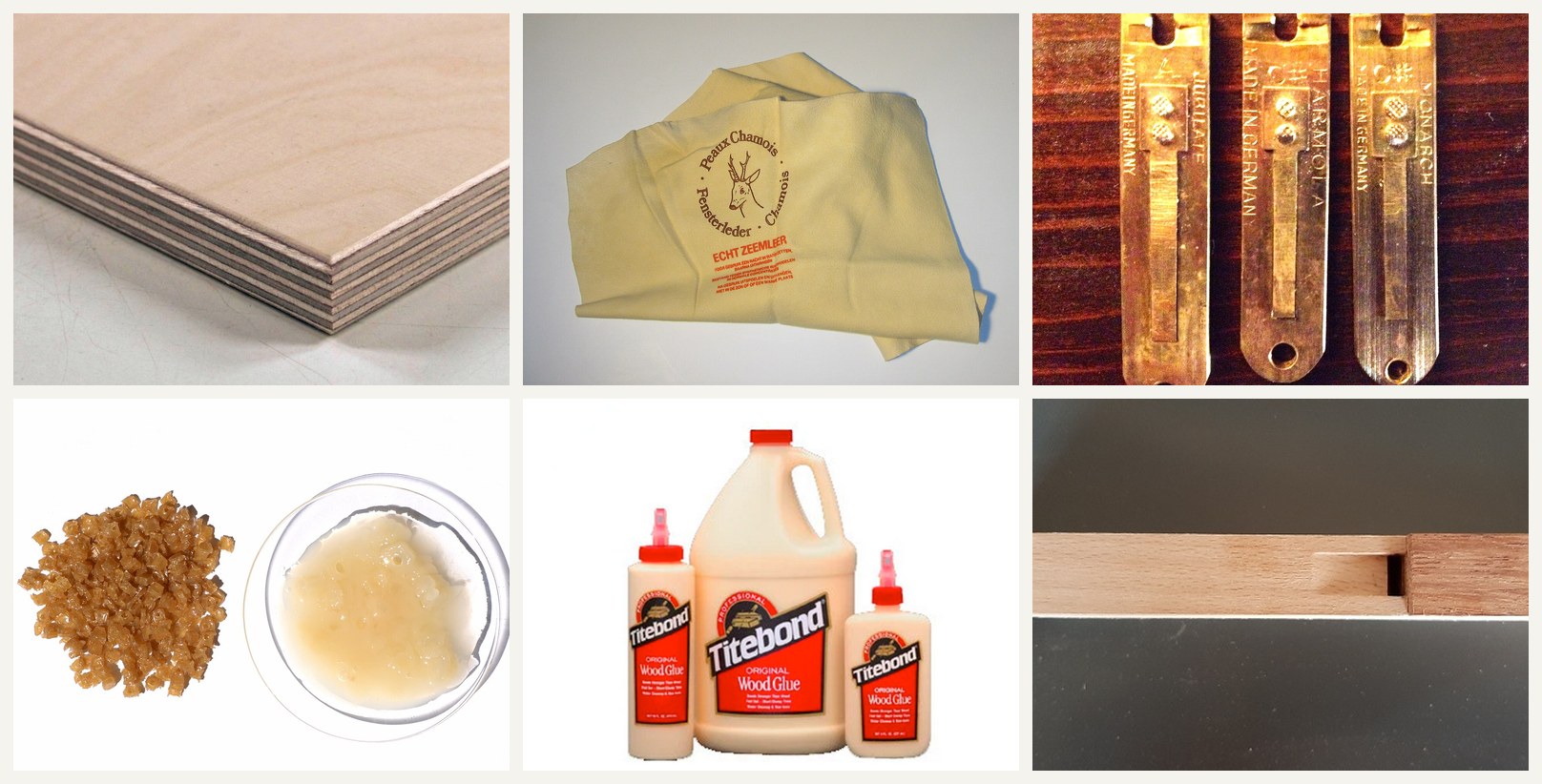
Woods make the structure and most of the sound. The case and body carry the loads and hold the air chests; the pipes — in a small crank organ almost always wooden, not metal — are the tone generators. Classic practice used solid softwoods and hardwoods (spruce, pine, fir, beech, mahogany, walnut); modern hobby practice leans on engineered panels (Baltic birch plywood, “concrete plywood,” MDF) for stability and availability. Woods are Volume 2.
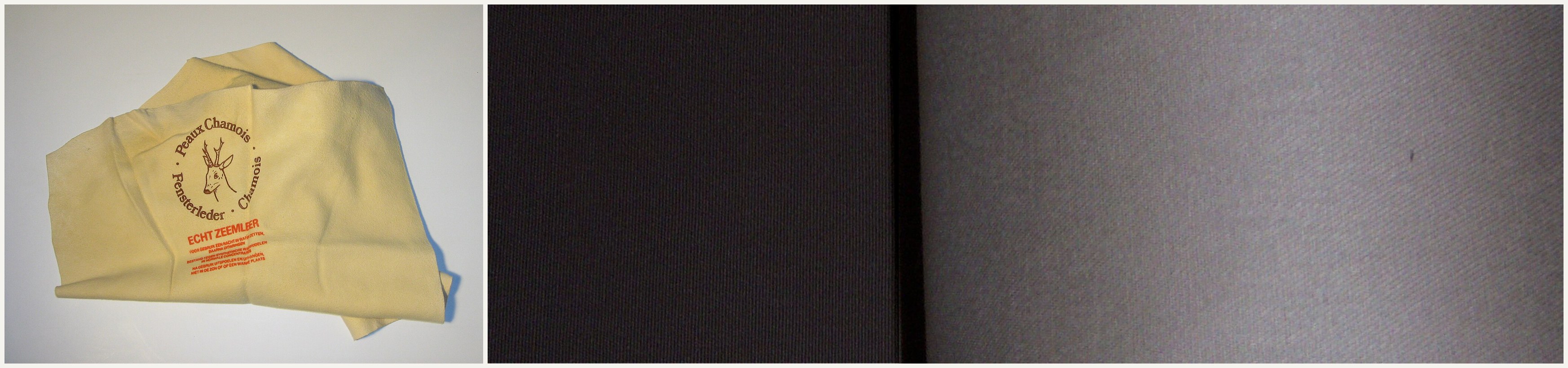
Leathers and flexibles seal every place air must move or a part must hinge airtight. Thin skins cover the feeder and reservoir bellows, form the pouches and pneumatics that actuate notes, and hinge the valves and flaps. The classic material is thin sheep or lamb skin, often alum-tawed; the modern hobby substitutes are blackout / bellows cloth for large low-stress bellows and purpose-sold membrane leather thinner than 0.5 mm for valves (en_materiaal). Leathers are Volume 3.
Metals and fasteners spring, pin, fasten, and — in antique or large organs — sound. Spring steel and piano (music) wire load the reservoir and bellows; brass makes pins, small springs, reed tongues, and fittings; solder (tin-lead) seams any metal pipes. Metal pipe alloys — spotted metal, common metal, zinc for basses — are the antique and large-organ side of the story, since busker pipes are wooden. Metals are Volume 4.
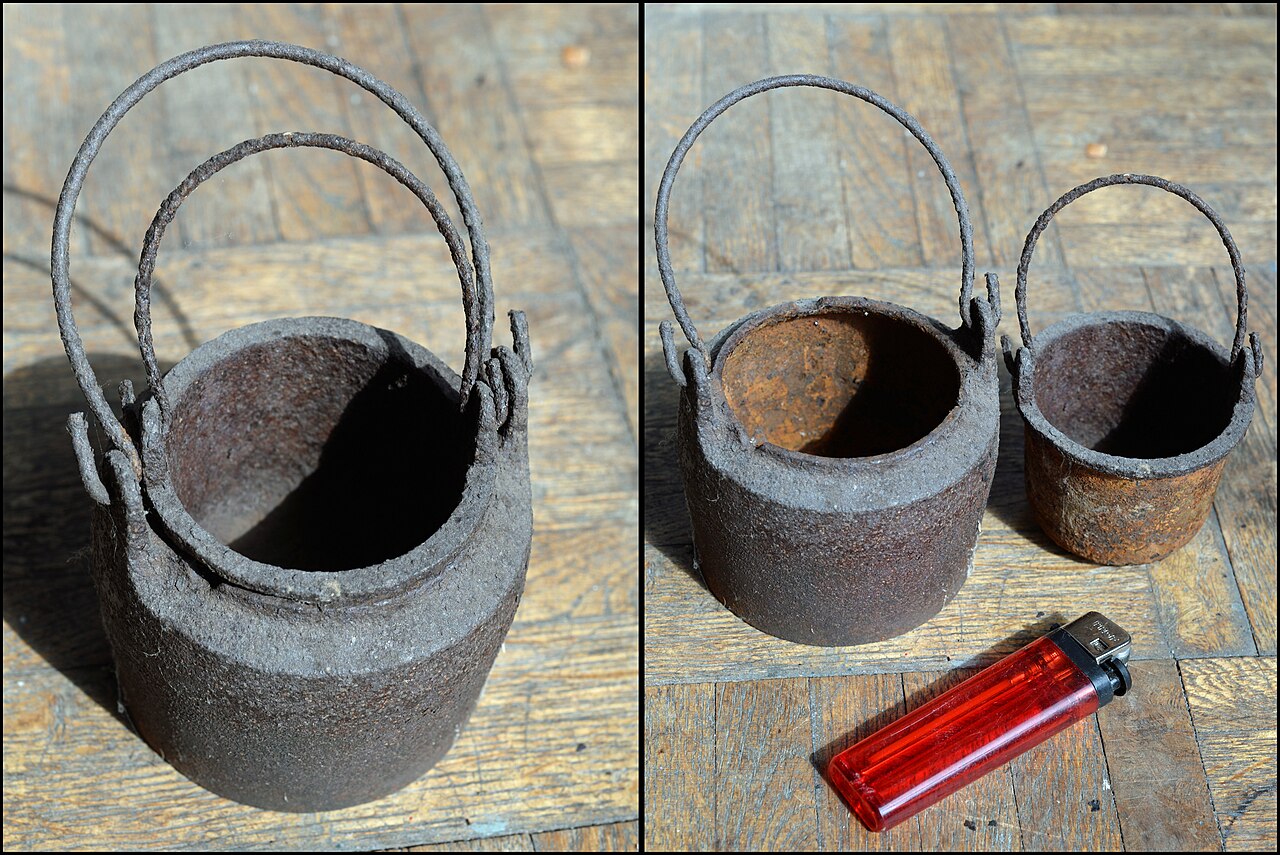
Glues and adhesives hold all of it together, and here the classic-versus-modern split is sharpest and most consequential. Hot hide glue is the classic; PVA (white/yellow wood glue) is what John Smith recommends for most of the busker build (jsart125, Thomas Spehar). Glues are Volume 5 — the headline volume of the dive.
Finishes protect and present the show wood and, more quietly, help govern how the structure exchanges moisture with the air. Classic shellac, oil, varnish, and wax versus modern polyurethane and acrylic; the preservation science behind them is Volume 6.
1.2 The classic-versus-modern axis
The single idea that organizes this dive is that nearly every material choice in a mechanical organ has a classic answer and a modern answer, and that the two are not “right” and “wrong.” They are answers to different questions. The classic answer optimizes for authenticity and reversibility — for a joint or a covering that a future restorer can undo without harm, made of the substance the antique was made of. The modern answer optimizes for availability, cost, and stability — for a material a hobbyist can buy today, cut with ordinary tools, and rely on not to move or fail in a working, gigging instrument.
Four material pairs carry the theme, and the dive keeps them explicit in every section rather than blurring them into a single “best” recommendation:
- Adhesive: hot hide glue (classic) vs PVA / epoxy / CA (modern). Hide glue is fully reversible with heat and moisture and can last centuries; PVA is cheap, forgiving, and non-toxic but effectively irreversible (Player-Care hide-glue Q&A; jsart125, Spehar). This is the headline pair.
- Bellows covering: alum-tawed / sheep leather (classic) vs blackout / rubberised cloth (modern). Leather is tougher, more airtight, and stretches to take up a corner, gluing to itself and to wood readily with ordinary PVA; blackout cloth is far cheaper, uniform, and comes in regular 54-inch rolls, but PVA will not grip it and it must be glued with Copydex (jsart135, Melvyn Wright).
- Structure: solid wood (classic) vs plywood / MDF (modern). Solid wood is traditional, repairable, and looks right, but it moves and must be quartersawn and grain-oriented; plywood and MDF are dimensionally stable, cheap, and available — the hobby default (The Wood Database; The Case, Façade & Figures).
- Pipe metal: spotted metal / organ zinc (classic) vs modern aluminium / stainless substitutes (modern) — a pair that only bears on antique and large organs, since busker pipes are wooden.
<text x="20" y="136" font-weight="bold">Bellows</text>
<text x="20" y="152">alum-tawed / sheep leather</text>
<text x="385" y="136" font-weight="bold">Bellows</text>
<text x="385" y="152">blackout / rubberised cloth</text>
<line x1="12" y1="162" x2="700" y2="162" stroke="currentColor" stroke-width="0.4"/>

<text x="20" y="186" font-weight="bold">Structure</text>
<text x="20" y="202">solid spruce/pine/beech/walnut</text>
<text x="385" y="186" font-weight="bold">Structure</text>
<text x="385" y="202">Baltic birch ply · MDF</text>
<line x1="12" y1="212" x2="700" y2="212" stroke="currentColor" stroke-width="0.4"/>

<text x="20" y="236" font-weight="bold">Pipe metal</text>
<text x="20" y="252">spotted metal · organ zinc (bass)</text>
<text x="385" y="236" font-weight="bold">Pipe metal</text>
<text x="385" y="252">aluminium / stainless subs.</text>
<line x1="12" y1="262" x2="700" y2="262" stroke="currentColor" stroke-width="0.4"/>

<text x="20" y="284" font-style="italic">→ museum-grade restoration</text>
<text x="385" y="284" font-style="italic">→ working hobby build</text>1.2.1 Two honest destinations: working build vs museum-grade restoration
The classic-versus-modern axis resolves into two legitimate destinations, and the choice of destination — not any single material’s merit — is what should drive a builder’s or restorer’s palette.
A working hobby build is an instrument meant to be played: carried to the street, cranked for hours, repaired on a kitchen table, and enjoyed. For this destination the modern palette is not a compromise but the recommended answer. John Smith’s own guidance for the Universal busker organ is PVA glue for most of the build (jsart125, Spehar) and sheep leather or blackout cloth for the bellows (jsart135, Wright). These materials are cheap, forgiving, tolerant of a beginner’s technique, and entirely fit for an instrument whose value is in the playing.
A museum-grade restoration is the opposite destination: an antique whose value is in its originality, where the goal is to keep the instrument playable — or merely intact — while changing as little of the original fabric as possible and while making every change one a future conservator can undo. For this destination the classic palette is the correct answer: hot hide glue, because it is the only fully reversible adhesive; like-for-like tawed or sheep leather on a re-cover, matched to what the maker used; and solid woods worked and finished as the original was.
Neither destination is wrong, and the two must not be muddled. Gluing an antique barrel organ with PVA or epoxy can permanently damage it and defeats any future restoration; over-engineering a street busker’s bellows with conservation-grade tawed skin and hot hide glue wastes money and effort on an instrument that would be better served — and more easily repaired — by blackout cloth and PVA. The dive’s recurring instruction is simply: decide the destination first, then pick the column.
1.2.2 Why reversibility is the deep principle
Underneath the four material pairs sits one idea that recurs so often it is worth stating on its own: reversibility. In conservation practice the governing rule is that a repairer should use “no modifications that cannot be easily and completely undone in light of future improved knowledge” (Karp, as summarized in the instrument-conservation literature), backed by two companions — minimal intervention (change as little as possible) and documentation (record, in writing and in photographs, everything that was done). The reason is humility about the future: a better technique, a better material, or simply better information may arrive after the repair, and a reversible repair leaves that door open while an irreversible one nails it shut.
This is exactly why the classic column reads the way it does. Hot hide glue is the classic adhesive not because it is stronger than epoxy — it is not — but because it is the only common adhesive a future restorer can cleanly release with heat and moisture, so a hide-glued joint can be taken apart and remade without destroying the wood around it (Player-Care hide-glue Q&A). Alum-tawed and sheep leathers are matched like-for-like in a restoration not out of nostalgia but because a re-cover that matches the original in substance and thickness behaves as the maker intended and can itself be replaced later without collateral damage. A working hobby build is under no such obligation — it exists to be played, not preserved as an artifact — which is precisely why the modern column is the honest answer there. The reversibility principle is developed fully in Vol 7; it is introduced here because it is the reason the whole classic column exists.
1.3 The material palette of the worked example
The program’s worked busker organ — treated in full in The John Smith Universal Organ — is a useful anchor because its palette is documented down to the panel thickness, and because it sits firmly in the modern column. It is what a working hobby build looks like when a good designer chooses the modern palette deliberately.
- Case and body: ¼-inch (≈ 6 mm) Baltic birch plywood — chosen for dimensional stability, flat panels, and glue-friendly edges (JS Universal; The Case, Façade & Figures).
- Pipe walls: ⅛-inch (≈ 3 mm) Baltic birch plywood.
- Pipe fronts: walnut, for the show face of the pipework.
- Pipes: balsa and basswood — light, easily worked wooden pipes, consistent with the busker norm that small-organ pipes are wooden rather than metal (cross-ref Building Organ Pipes).
- Glue: PVA throughout (jsart125, Spehar).
The hobby corpus documented at hobbycrankorgan.com sits in the same column with small variations: beech for pipe front slats (en_pijp), sheep leather for the bellows where a builder wants to be “as original as possible” (en_31toets), and a parts list that offers membrane leather thinner than 0.5 mm for valves and an 8-pound bellows spring in spring steel (en_materiaal). These worked palettes are the concrete reference points the later volumes measure the classic alternatives against.
Context — scale and wind (from the sibling dives, not re-derived here). Small crank organs are counted in notes: 20-note is the Carl Frei / Raffin scale, 26-note is the Alderman scale. A note is not a pipe — one note commonly feeds several pipes through the registers, so pipe count exceeds note count. The working wind pressure is ≈ 5 in H₂O = 127 mm ≈ 1.245 kPa; the manometer and bellows mechanics that produce and regulate it belong to Wind Systems, and are named here only so the material choices have a load to sit against.
1.4 How the palette cross-cuts the program
Because this dive owns substances rather than mechanisms, it deliberately overlaps the subsystem dives at the material boundary and hands the mechanism back to them. It is worth being explicit about who owns what, so a reader knows which dive to open:
- Building Organ Pipes owns pipe making — the cutting, the mouth geometry, the assembly. This dive covers pipe woods and metal alloys as materials (Volumes 2 and 4) and cross-refers the making.
- How Organ Pipes Make Sound owns pipe acoustics. This dive never re-derives why a pipe speaks; it only supplies the substances the pipe is cut from.
- Wind Systems owns bellows and reservoir mechanics and the wind pressure. This dive covers the bellows leather and flexibles as materials and the re-leathering craft (Volumes 3 and 7), and points to Wind Systems for how the bellows moves.
- The Case, Façade & Figures owns case wood and finish for looks — the decoration, the carving, the gilding. This dive owns the material science and the structural / preservation side of the same woods and finishes (Volumes 2 and 6); it does not duplicate the decoration how-to.
- The John Smith Universal Organ and The Hobby Crank Organ are the worked builds whose documented palettes this dive treats as reference points.
The division is clean in principle: the sibling dives are verbs (making, sounding, winding, decorating, building), and this dive is the nouns (the woods, skins, metals, glues, and finishes those verbs act on), plus the conservation craft that keeps the nouns alive.
1.5 The palette in one table
The five material classes, their classic and modern representatives, and the volume that treats each in full:
Table 1 — that treats each in full
| Material class | Classic | Modern | Covered in |
|---|---|---|---|
| Case / body wood | Solid spruce, pine, fir, beech, mahogany, walnut | Baltic birch plywood, “concrete plywood,” MDF, composites | Vol 2 (Woods) |
| Pipe tonewood | Spruce, pine, beech, mahogany | Beech, balsa, basswood (busker pipes are wooden) | Vol 2; cross-ref Building Organ Pipes |
| Bellows covering | Alum-tawed / sheep or lamb leather | Blackout / rubberised bellows cloth (Copydex-glued) | Vol 3 (Leathers & Flexibles) |
| Pouch / pneumatic leather | Thin sealed-pore sheepskin (pneumatic / pouch leather) | Same, plus polyurethane-coated fabric (player-piano trade) | Vol 3 |
| Valve / flap leather | Thin leather | Membrane leather < 0.5 mm (en_materiaal) | Vol 3 |
| Pipe metal (antique / large organs) | Spotted metal ≈ 50/50, common metal ≈ 30/70 tin-lead, organ zinc for basses > ~4′ C | Aluminium / stainless substitutes | Vol 4 (Metals & Fasteners) |
| Springs / fasteners | Spring steel, piano (music) wire, brass pins | Same alloys, modern hardware (M6 etc.) | Vol 4 |
| Adhesive | Hot hide glue (~192 gram strength furniture grade), fish glue | PVA / aliphatic, epoxy, CA, hot-melt; Copydex for cloth | Vol 5 (Glues & Adhesives) |
| Finish | Shellac / French polish, oil, varnish, wax | Polyurethane, acrylic | Vol 6 (Finishes & Preservation) |
Tannage and gram-strength details, alloy percentages, and wood-movement figures are introduced in the volume named for each row; the table gives the shape of the palette, not its full specification.
1.6 Roadmap — Volumes 2 through 7
The remaining six volumes take each material class in turn, hold the classic and modern columns apart within it, and end with the restoration craft that ties the whole palette to the conservation ethic.
- Vol 2 — Woods. Case and body woods (solid softwoods and hardwoods versus Baltic birch ply, “concrete plywood,” and MDF) and pipe tonewoods (beech, balsa, basswood — cross-referring Building Organ Pipes). The wood-movement science that governs every choice: tangential shrinkage ≈ 2× radial (T/R ≈ 2), so a quartersawn board moves about half as much across its width as a flat-sawn one; seasoning and equilibrium moisture content (fibre saturation point ≈ 30 %, indoor EMC ≈ 6–12 %); and the engineered-versus-solid trade-off of stability and cost against authenticity and reversibility.
- Vol 3 — Leathers & Flexibles. Which leather goes where (sheep or lamb bellows; thin sealed-pore pneumatic and pouch leather; membrane leather < 0.5 mm for valves; kangaroo or kid where a very thin, strong skin is wanted); the tannages and why they matter (alum-tawed = rot-resistant but moisture-sensitive and water-reversible; vegetable-tanned = prone to red rot, worst in 1850–1900 acid-tanned skins; chrome = the modern general tannage); and the modern substitutes (blackout / rubberised bellows cloth, Copydex-glued). Cross-refers Wind Systems for the bellows mechanics.
- Vol 4 — Metals & Fasteners. Metal pipe alloys (spotted ≈ 50/50, common ≈ 30/70 tin-lead, plain tin ~ 75 %, antimonial lead ≈ 94/6, zinc for basses > ~4′ C) — framed as the antique and large-organ side, since busker and hobby pipes are usually wooden beech (cross-ref Building Organ Pipes); brass for pins, small springs, reed tongues and freins; spring steel and piano wire for reservoir and bellows springs (the hobby 8-pound spring, en_materiaal) and tuning wires; solder for metal-pipe seams; and modern aluminium and stainless substitutions.
- Vol 5 — Glues & Adhesives (the headline volume). Hot hide glue in full — graded by gram strength (~192 the standard furniture grade, higher gram = shorter open time), open time ≈ 1–2 minutes as it sets on cooling, a hard and brittle bond that breaks apart without damaging the wood, and fully reversible with heat and moisture so that it “lasts centuries” and is the conservator’s choice — set against the modern palette (PVA / aliphatic, John Smith’s recommended busker glue; epoxy; CA; hot-melt; Copydex for cloth) and the reversibility trade-off that decides which destination gets which glue.
- Vol 6 — Finishes & Preservation. Classic finishes (shellac / French polish, oil, varnish, wax) versus modern (polyurethane, acrylic); what a finish does for wood-movement and moisture control; and the preservation science — relative humidity, temperature, UV, and SO₂ pollution and their effects on wood, on leather (red rot), and on metal corrosion — with the decorative how-to left to The Case, Façade & Figures.
- Vol 7 — Antique-Organ Restoration. The ethics first: the reversibility principle (nothing that cannot be easily and completely undone), minimal intervention, thorough documentation, and the conserve-versus-restore-versus- replace tension — attributed to the instrument-conservation bodies (MBSI, COAA, AMICA). Then the technique: re-leathering bellows and pneumatics and pouches (matte-side-to-wood, liquid hide glue), cleaning and re-pinning barrels, and dealing with woodworm, cracks, and warping — closing with reference tables, a glossary, and a bibliography that serve the whole dive.
Read together, the seven volumes are a single argument: a mechanical organ is a small set of well-understood substances, each with a classic and a modern answer, and the craft of building or keeping one is the craft of choosing the right column for the instrument in front of you — and doing it in a way the next person can live with.
Comments (0)